
Last updated November 15, 2026
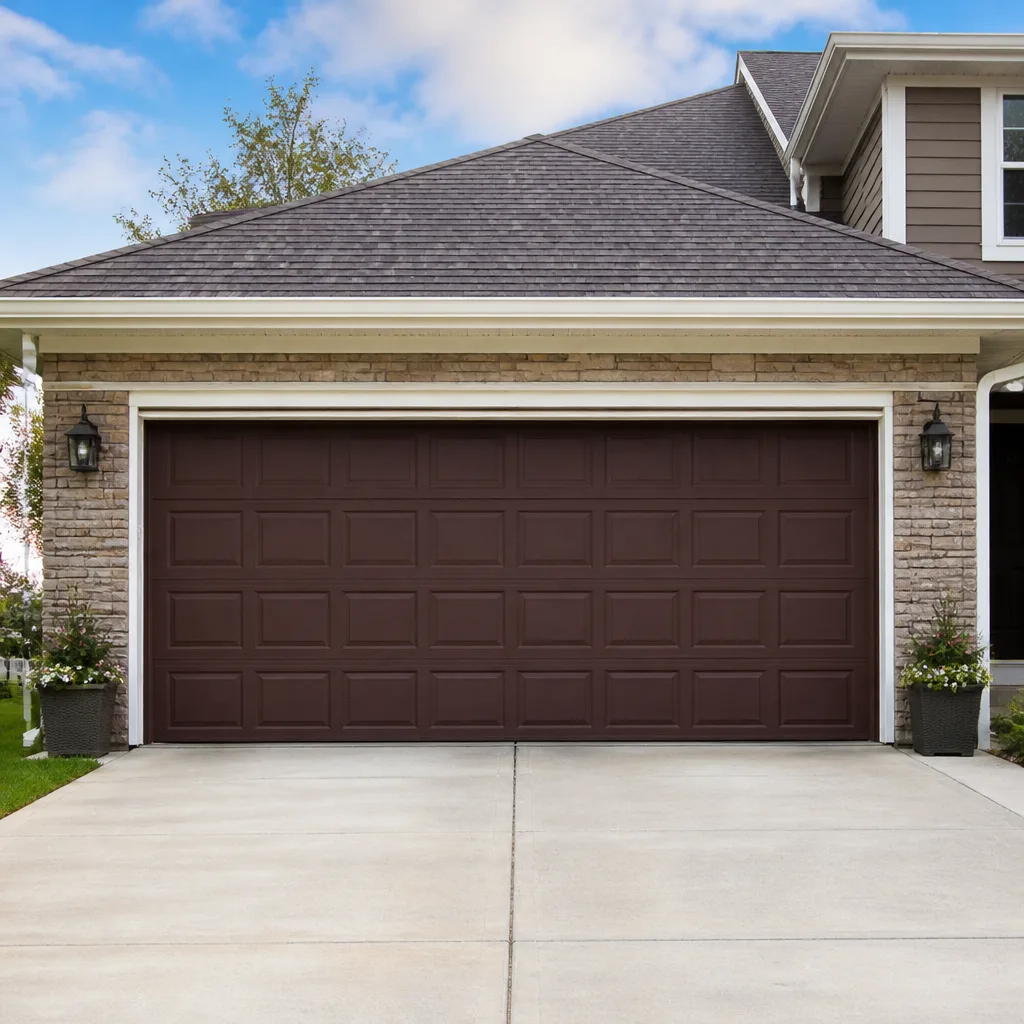 Raised-panel steel
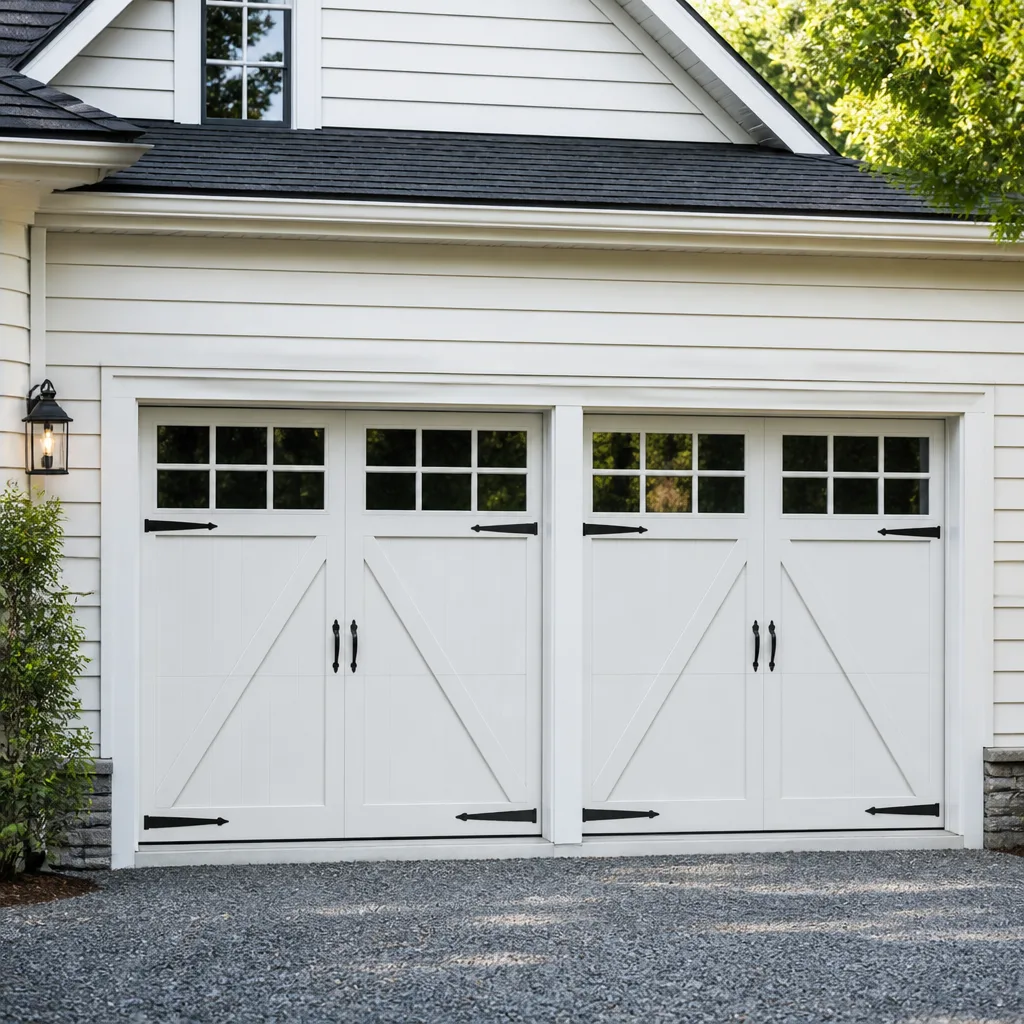 Carriage house
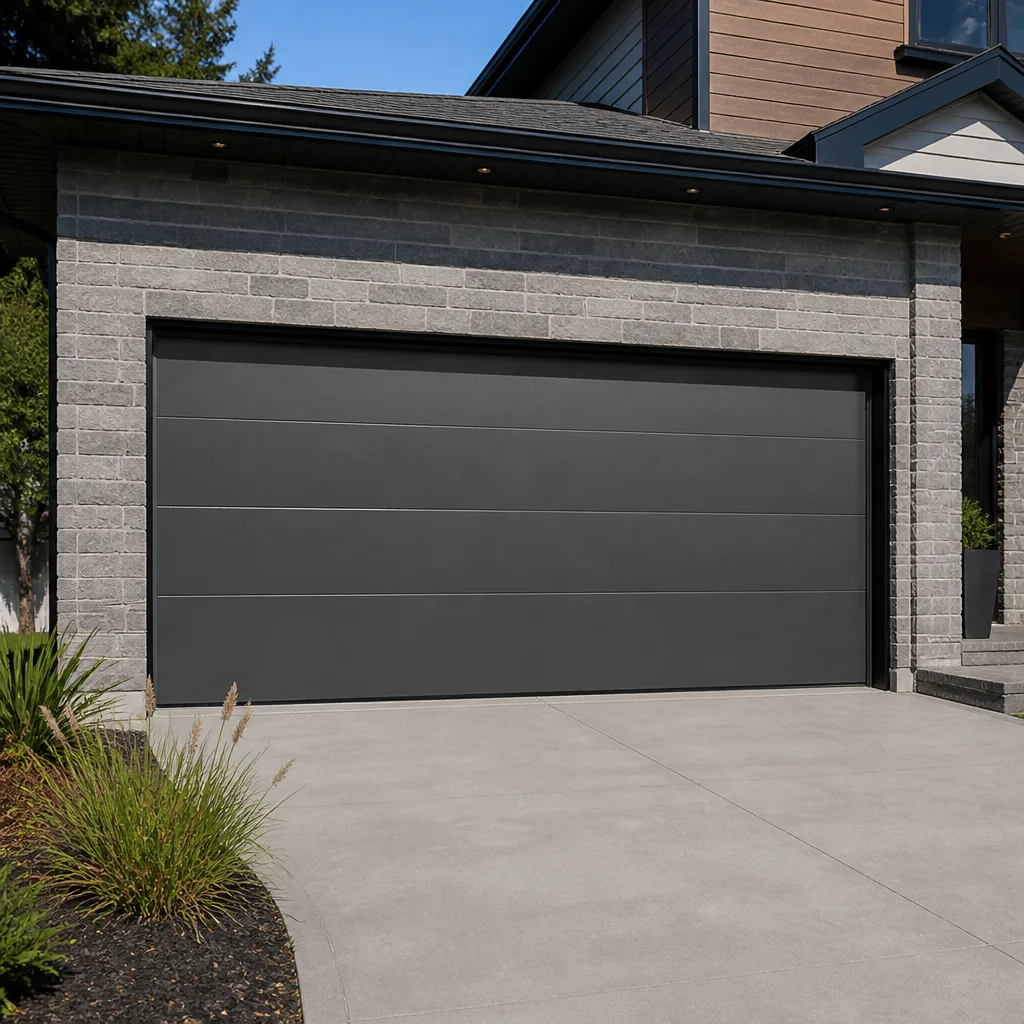 Modern flush
 Full-view glass
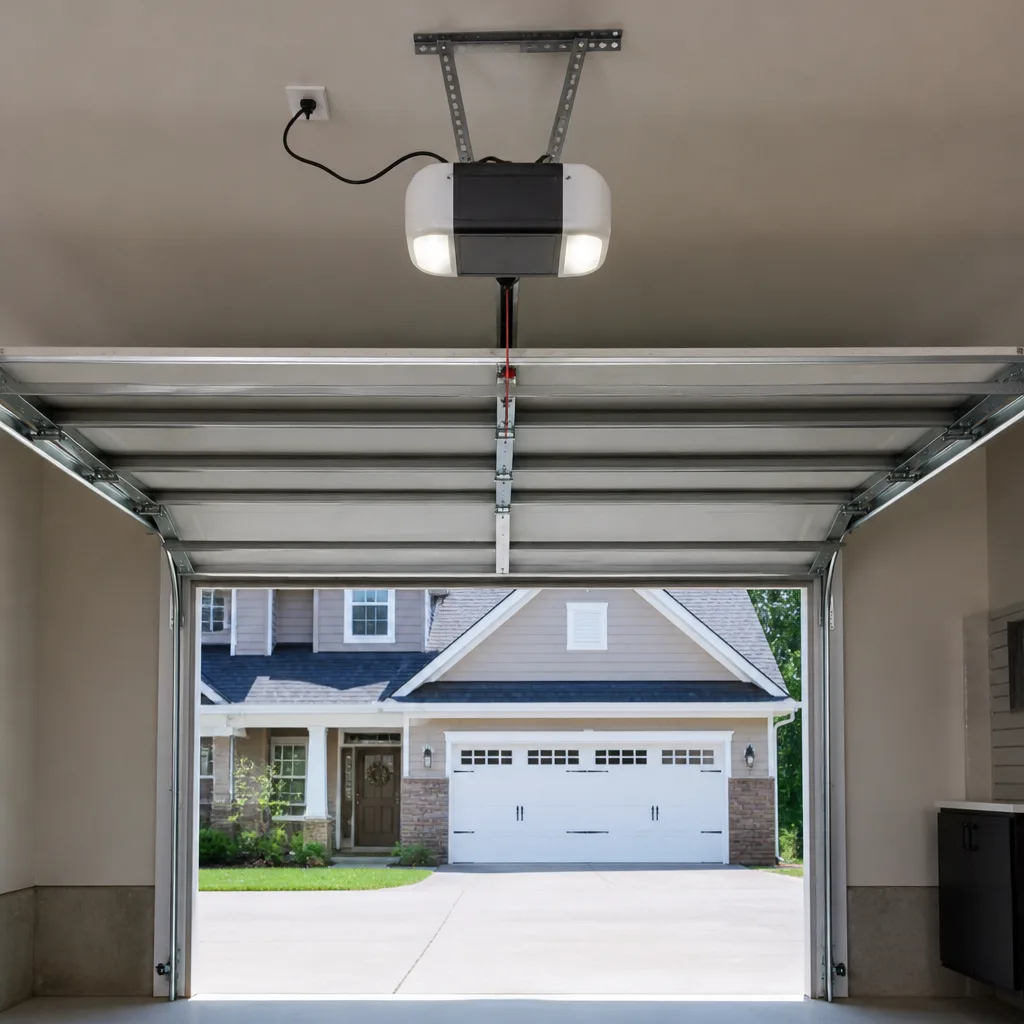 LiftMaster openers
 Chamberlain openers
Full 25-point door and opener safety check with every visit - springs, cables, rollers, tracks, and your LiftMaster or Chamberlain opener included
You get a price before we start. It does not change when the pro arrives.
Get your free estimateGarage Door Repair Troubleshooting in Centennial: Common Problems and How to Fix Them
The number one reason a “fixed” garage door breaks again within 90 days is simple: the wrong part was replaced because the right diagnosis was never made. A door that won’t open looks identical whether a torsion spring snapped, a lift cable jumped its drum, or a roller wedged in a bent track. Homeowners guess at the symptom, buy the part nearest to it, and the real failure keeps grinding away in the background. This guide changes the order of operations. We walk through what each sound, movement and opener behavior actually means, why Centennial’s climate produces its own failure patterns, and how to tell a DIY-safe adjustment from a repair that belongs to someone trained to do it. You’ll finish knowing how to describe your problem in plain mechanical terms – which is how a repair gets done once, not twice.
Quick Answer
Most garage door problems in Centennial fall into five root causes: spring failure, cable failure, track misalignment, a sensor or wall-switch issue, or a tired opener. The fastest way to narrow it down is to watch the door’s movement, listen to the noise, and note the opener’s response – each one points to a different system. Anything involving torsion springs or cables should go to a trained professional; the rest can often be identified safely before you call.
Styles & brands we work with
- Raised-panel steel
- Carriage house
- Modern flush
- Full-view glass
- LiftMaster openers
- Chamberlain openers
Table of Contents
- Symptom-to-Cause Decision Tree: Start Here
- Spring Failure, Cable Failure or Track Misalignment?
- Why Centennial’s Temperature Swings Cause Specific Failures
- Dead Opener or Dead Wall Switch: The Easy Diagnosis
- What Your Door’s Noise Is Telling You
- What’s DIY-Safe and What Isn’t
- Brand Matters for Diagnosis, Not Just Replacement
- When to Call a Professional
Symptom-to-Cause Decision Tree: Start Here
Before you touch anything, isolate the problem to one of three areas: the opener (electronics and motor), the door (panels, hinges, rollers), or the counterbalance system (springs and cables). That single step eliminates half the guesswork. Use this sequence to sort your situation:
- Listen first. Did you hear a loud bang from the garage, like a shot, followed by a door that won’t lift? That’s a spring failure. Did you hear a clunk or snap and see a loose cable hanging? That’s a cable failure.
- Try the wall switch, not the remote. If the wall switch works and the remote doesn’t, the problem is the remote or its battery. If neither works, the issue is at the opener or the power supply.
- Watch the door’s first few inches. A door that starts up and reverses immediately is almost always a sensor or safety-reverse problem. A door that strains but stays put is a counterbalance or track problem.
- Look at the track with the door closed. Any visible bend, gap between sections, or roller popped out of the channel is a track misalignment.
- Check the photo-eye sensors at the base of the track. A small LED that won’t stay lit, a knocked-out bracket, or an obstruction in the beam is the most common “won’t close” cause.
This sequence takes about two minutes and tells you which of the deeper sections below applies to you. If you’re ever unsure, our team can walk through a diagnosis with you – see garage door repair for how a service visit works.
Spring Failure, Cable Failure or Track Misalignment?
Three failures look almost identical from the driver’s seat – “door won’t open” – yet they require completely different repairs at very different price points. Getting this distinction right on your own is the single biggest factor in whether your repair holds. Here’s how each one actually behaves.
Spring failure
A torsion spring sits above the door on a steel shaft and holds the door’s weight in balance. When it breaks, you hear a sharp bang and the door becomes impossible to lift manually. A door with a broken spring may be partially open and stuck; never try to force it down. Springs are under extreme tension and are the most dangerous component in the entire system. This is never a DIY repair.
Cable failure
Lift cables run along the sides of the door and wrap around drums at each end of the shaft. If a cable snaps or comes off its drum, the door sags on one side, tilts in the track, or hangs at an angle. You may see frayed cable or a loose strand near the drum. Cables are also under heavy tension. Treat a damaged cable as unsafe and keep the door closed.
Track misalignment
A bent track usually shows up as a door that binds, jams halfway, or scrapes metal on metal. Rollers can jump out of a dented section, or a wall bracket can shift. Unlike springs and cables, some track issues are adjustable by a careful homeowner. But if the misalignment is caused by a failing cable pulling the door sideways, fixing the track alone won’t solve it.
Comparing the three side by side:
- Spring: loud bang, door dead in place, no visible sag. Stop and call a pro.
- Cable: snap sound, visible sag or tilt, loose or frayed cable. Stop and call a pro.
- Track: scraping, binding, roller out of channel. Often adjustable, but inspect for a deeper cause.
Most of the “fixed and failed again” calls we hear about trace back to a homeowner or generalist handyman treating a cable-induced sag as a track problem. The door gets pushed back into the track, the failed cable keeps pulling, and the door fails again.
Why Centennial’s Temperature Swings Cause Specific Failures
Centennial sits at high elevation along the Front Range, and that geography drives a cycle of expansion and contraction that shapes garage door failure more than most homeowners realize. Winters bring sub-zero stretches; summers push into the 90s. Every spring, every cable, every steel track and every lubricated joint goes through hundreds of these cycles a year.
What that means in practice:
- Springs weaken faster. Steel torsion springs lose tension across repeated thermal cycling, and a spring that’s near the end of its life is far more likely to break during the first cold snap of the season or a sudden thaw. If your door gets noticeably heavier to lift in January than it did in October, the spring is telling you something.
- Cables and drums drift. Metal cables become brittle in cold and can develop kinks or frayed strands. When a drum takes up a cable poorly because of contraction, the cable can slip its groove.
- Panels and seals shift. The rubber weather seal along the bottom edge hardens in the cold, and when it does, it can catch on the threshold and strain the opener. Thermal movement in the door panels can also loosen hinge screws and create rattles that weren’t there before.
- Hardware loosens. Bolts, brackets and lag screws work themselves out over a season of expansion and contraction. A routine tightening catches many problems before they become a repair.
Homeowners in Centennial who schedule a yearly inspection – ideally before the first freeze and again in late spring – catch most of these conditions before the door fails in the middle of a cold morning. That’s not a sales pitch for a plan; it’s simply the pattern we’ve seen across a region where the thermometer moves 60 degrees in a week. If you’re already noticing stiffness or noise, that’s a good time to look at Centennial service options and get a diagnosis.
Dead Opener or Dead Wall Switch: The Easy Diagnosis
Here’s the diagnosis that saves the most money and gets skipped the most. A garage door that won’t respond to the button can fail from a dead opener, a dead wall switch, a bad remote battery, a tripped breaker, or a broken safety sensor. A wall switch that’s simply failed is an inexpensive part; a full opener replacement is a different order of job. Knowing which is which before you call keeps a small problem from being treated like a big one.
- Test the wall switch. Press the interior wall button. If the door moves, your opener is fine and the fault is in the remote or its battery.
- Test the remote after replacing its battery. If it still doesn’t work, the remote or its programming may need attention – the opener itself is likely healthy.
- If neither works, check the power. Look at the outlet the opener is plugged into and the breaker panel. A tripped breaker or unplugged cord is the cheapest possible fix.
- Look for a blinking light on the opener unit. Most modern openers – LiftMaster and Chamberlain models included – use a diagnostic LED that flashes a code when something is wrong. That code is a real shortcut to the cause.
- Check the safety sensors. If the door starts to close and reverses, the photo-eye beam is obstructed or the sensors are misaligned. Wipe the lenses, straighten the brackets, and check that the indicator LEDs are steady.
If the opener runs but the door doesn’t move, or you hear the motor spinning without the chain or belt turning, the problem is mechanical – a stripped gear, a broken chain, or a disconnected trolley. That’s a repair job, and it’s worth having a specialist look at it. Depending on the age of the unit, a repair may be the right call; sometimes replacement makes more sense. Our garage door opener repair team works on all the major brands and can tell you which path is worth taking.
What Your Door’s Noise Is Telling You
Sound is the most reliable diagnostic tool you have, and it’s free. The type of noise, and when it happens, points to a specific mechanical cause. Match your door’s behavior to this list.
- A loud bang from the garage, then silence: a broken torsion spring. Do not operate the door.
- Grinding or scraping metal on metal: a roller out of the track, a bent track section, or a dry hinge. Inspect the track first.
- A squeak or squeal while moving: dry rollers, hinges or a dry torsion shaft. This is the routine noise that lubrication addresses.
- A rattle or clatter: loose hinge screws, loose brackets, or a panel that’s come slightly out of alignment.
- A humming motor with no movement: a stripped gear or a broken chain/belt inside the opener.
- A clicking near the opener: a relay or logic board issue, common on older Craftsman and Genie units.
The lubrication check
Before you assume the worst, note whether the noise is new or has been developing slowly. A door that’s been squeaking for weeks and suddenly grinds is a different problem than a door that’s been silent and then makes one loud bang. Lubricate the rollers, hinges and torsion shaft with a garage-door lubricant – not grease or WD-40, which attract dirt – and see if the noise changes. If it disappears, the problem was friction. If it persists, the noise is mechanical and worth a professional’s look.
What’s DIY-Safe and What Isn’t
Some garage door maintenance is genuinely safe for a careful homeowner. Some is not, and no amount of online confidence makes it safe. Here’s the clear line, and it matters because a torsion spring under tension is one of the few household components that can cause serious injury in a fraction of a second.
Safe for most homeowners at home
- Replacing remote batteries, or reprogramming a remote.
- Wiping down the safety sensor lenses and checking that the brackets are upright.
- Lubricating rollers, hinges and the torsion shaft with a proper garage-door lubricant.
- Tightening loose hinge screws and brackets with a screwdriver.
- Testing the safety reverse by placing a small object in the door’s path – but only with the door well clear of people and pets.
- Cleaning the weather seal and checking the bottom edge for damage.
Professional only
- Any adjustment or replacement of torsion springs. A single spring holds hundreds of pounds of force. This is not a homeowner repair.
- Cable replacement or resetting a cable on its drum.
- Straightening a bent track that’s come loose from a wall bracket, unless you can do it from the ground with the door closed and the opener disconnected.
- Removing the opener from the door or the ceiling.
- Any work on the door while it’s open and under tension.
The single biggest mistake we run into is a homeowner who disengages the opener and lifts a door with a broken spring to “check” it, then ends up with a door that falls and a bent track or worse. If your door won’t lift with the opener’s handle, leave it down and call. There’s also a practical limit on a two-spring setup: if you have two torsion springs side by side, they’re designed to work as a pair and should be replaced as a pair. A single spring swapped into a two-spring configuration can leave the door out of balance and shorten the life of the replacement. Price that job as a pair, not a single spring.
Brand Matters for Diagnosis, Not Just Replacement
A garage door system is a matched set of a door and an opener, and both come in a range of brands with their own quirks. A technician who works across a single manufacturer’s product line guesses when they meet something else. A specialist who’s seen the common failure points of each brand shortens the diagnosis and reduces the odds of a callback.
What that looks like in practice:
- LiftMaster and Chamberlain: these two share a lot of engineering, and their diagnostic LED codes are a huge time-saver. Common issues include logic board failures and worn drive gears.
- Genie: the older screw-drive and chain-drive units are reliable but have specific wear points on the carriage and the drive screw. Recognizing the noise pattern gets you a straight answer fast.
- Clopay: one of the most common residential door brands on Front Range homes. Panel alignment, hinge wear and the fit of the weather seal are the recurring themes.
- Craftsman: widely installed and often aging. Replacement parts are available, but knowing when to repair versus replace is the real judgment call.
We work on all of these, plus Amarr, Wayne Dalton and Raynor. That breadth means we’re not steering you toward a brand we prefer – we diagnose what’s on your house. When a repair or replacement is on the table, the answer comes from the condition of the hardware, not the logo on the front.
Can You Repair This Yourself? A Realistic Answer
Yes for maintenance, no for mechanical repair under tension. If a hinge is loose, a sensor is dirty, or the door needs lubrication, you can handle it. If the door won’t lift, sagged, jammed, or started making a loud bang, that’s a professional repair – not because it’s complicated but because the parts involved hold thousands of pounds of stored force. The distinction isn’t about your skill level; it’s about the physics of a tensioned spring.
If you’re on the fence, describe the symptom to us. We can usually tell you in a 30-second conversation whether you’re looking at a $4 battery or a counterbalance repair, and that call is free. Booked repairs are scheduled around your day, and Lockhart Garage Door Service handles the whole system, not just one side of it.
How Long Do Repairs Take in Centennial?
Most common repairs are done in a single visit, typically within one to three hours depending on the job. A spring replacement is usually the longest of the routine repairs because the door has to be balanced and tested afterward. Sensor and wall-switch issues are often much faster. A full opener replacement is generally scheduled rather than done same-day, because the unit needs to be matched to the door and the safety systems re-tested.
What we can’t promise is a precise time before we’ve seen the door. The variables are real: a cable-induced track bend takes longer than a simple track adjustment, and a door with hidden panel damage takes longer than one with clean panels. What we do promise is that the price is quoted and agreed before any work starts. You’ll know the cost before the first tool comes out of the case.
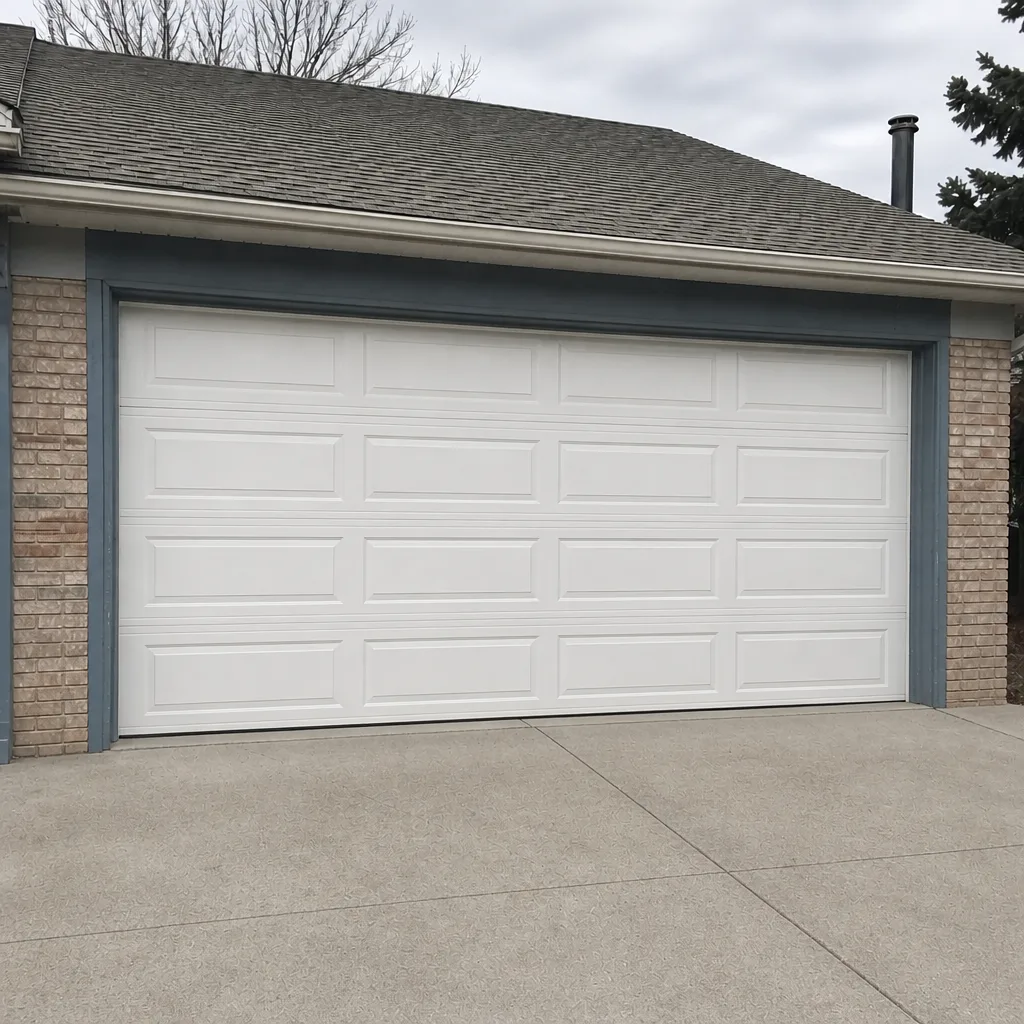
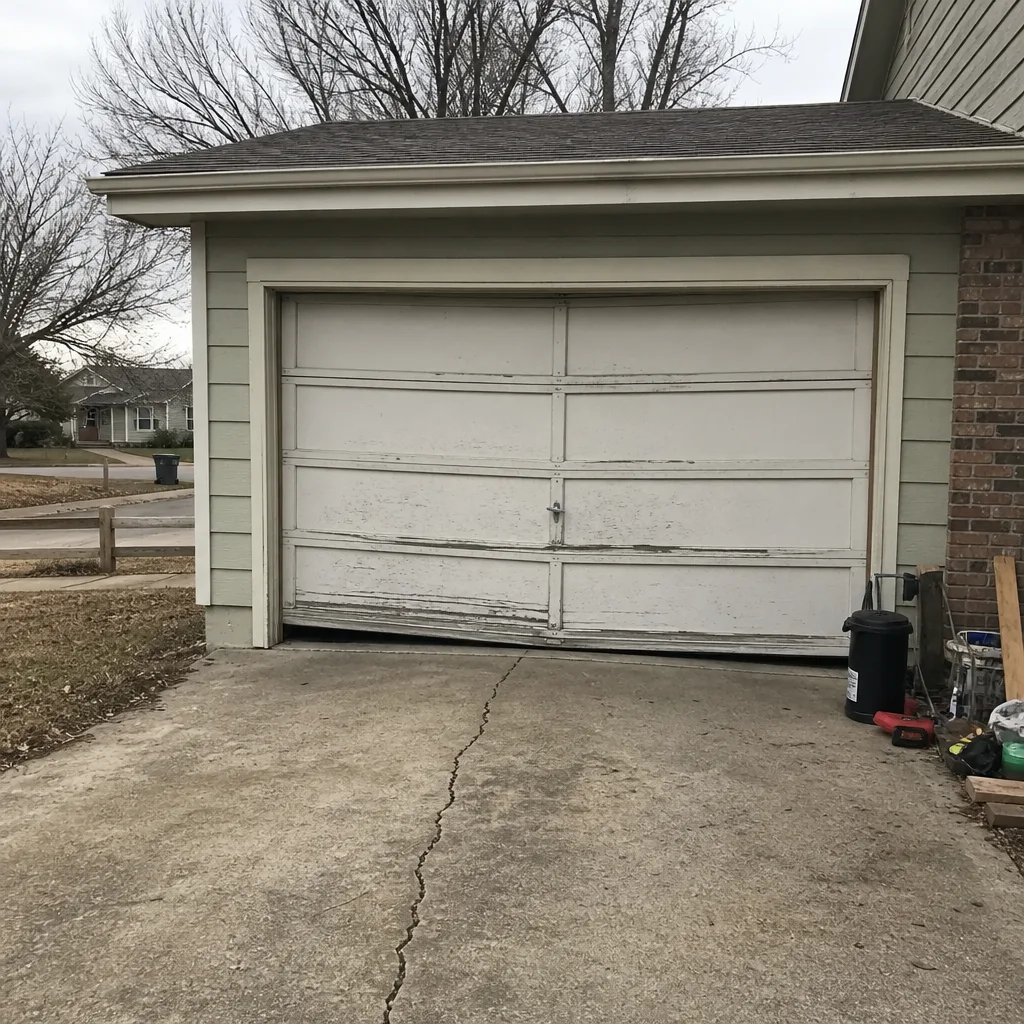
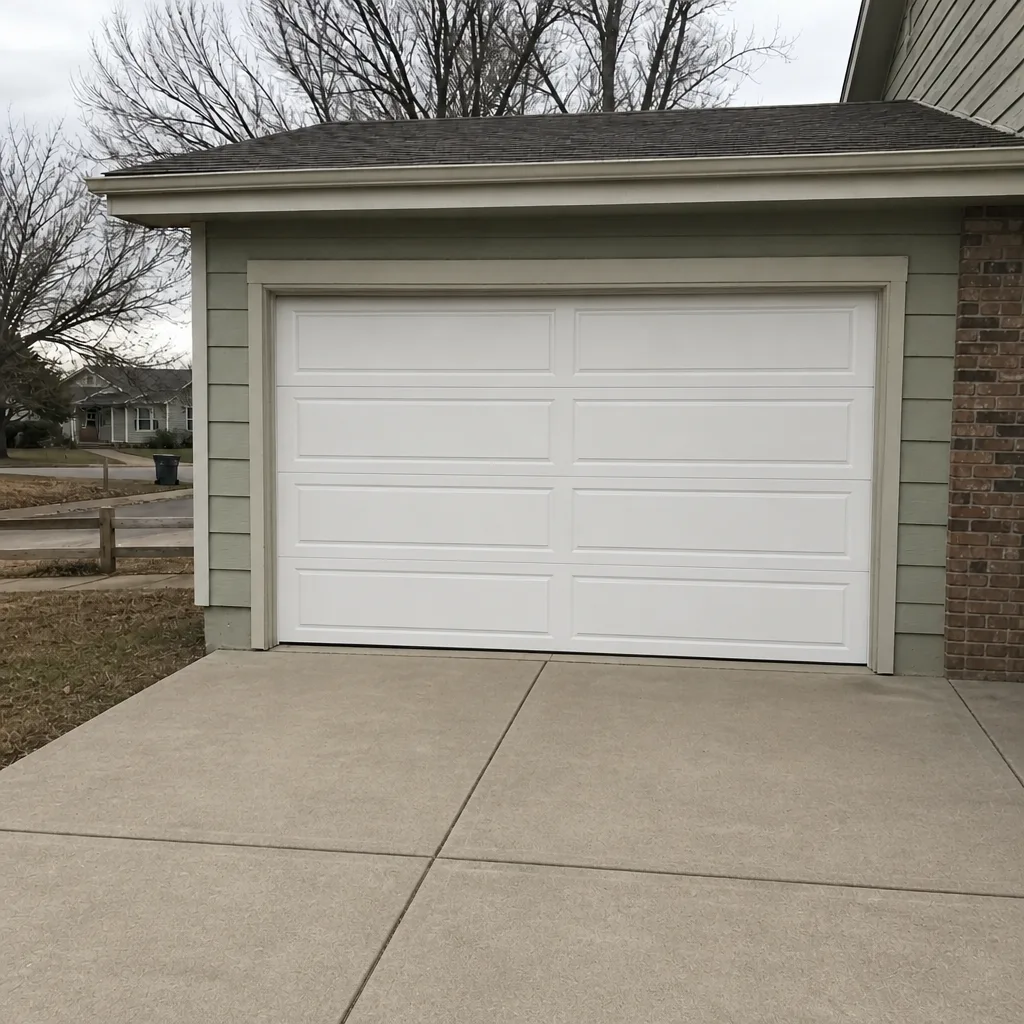
See the difference
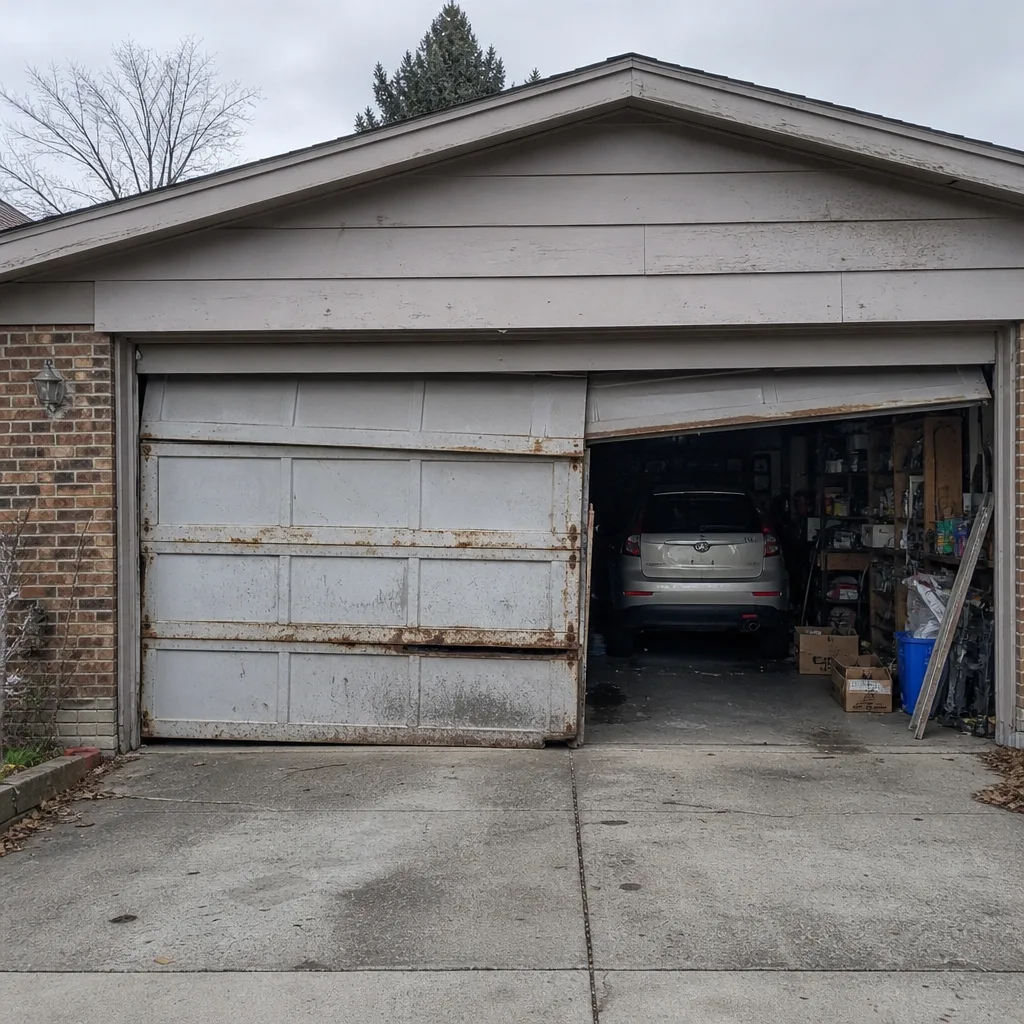 Before
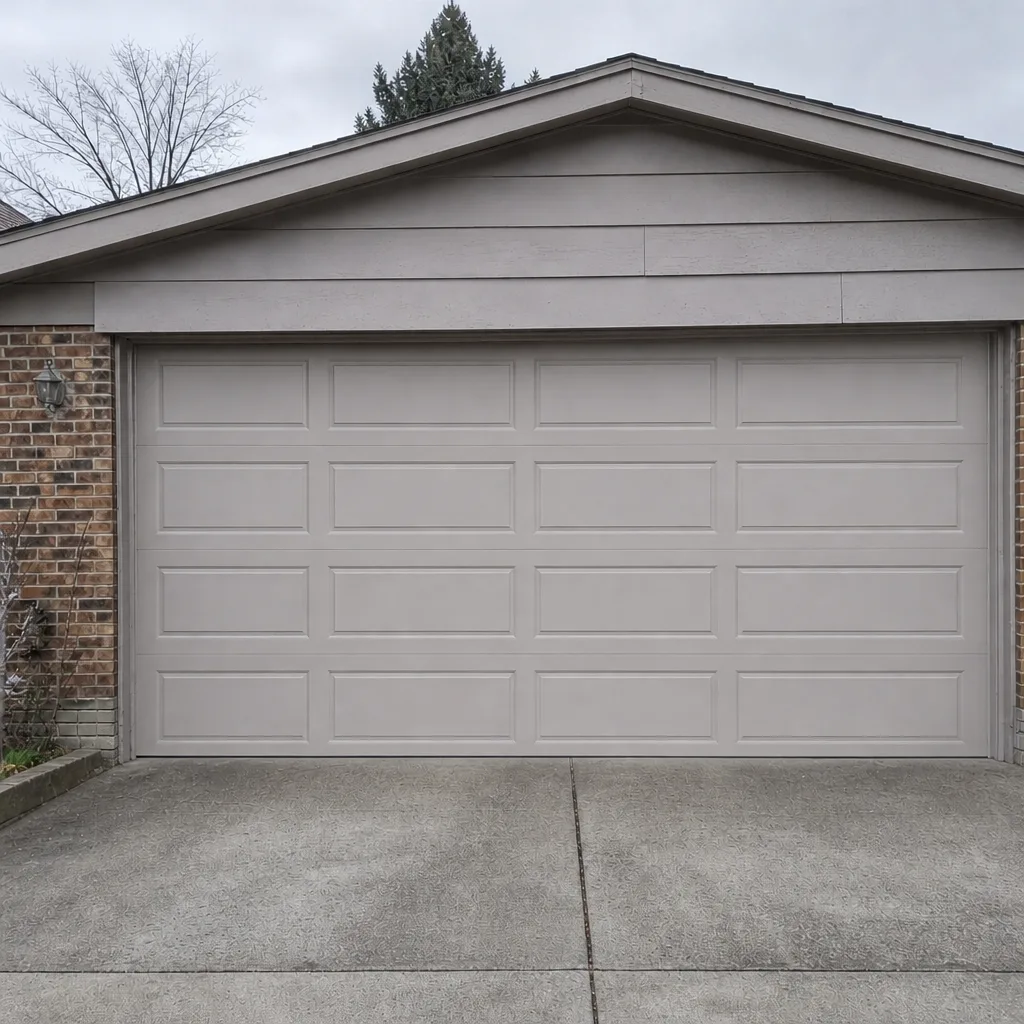 After
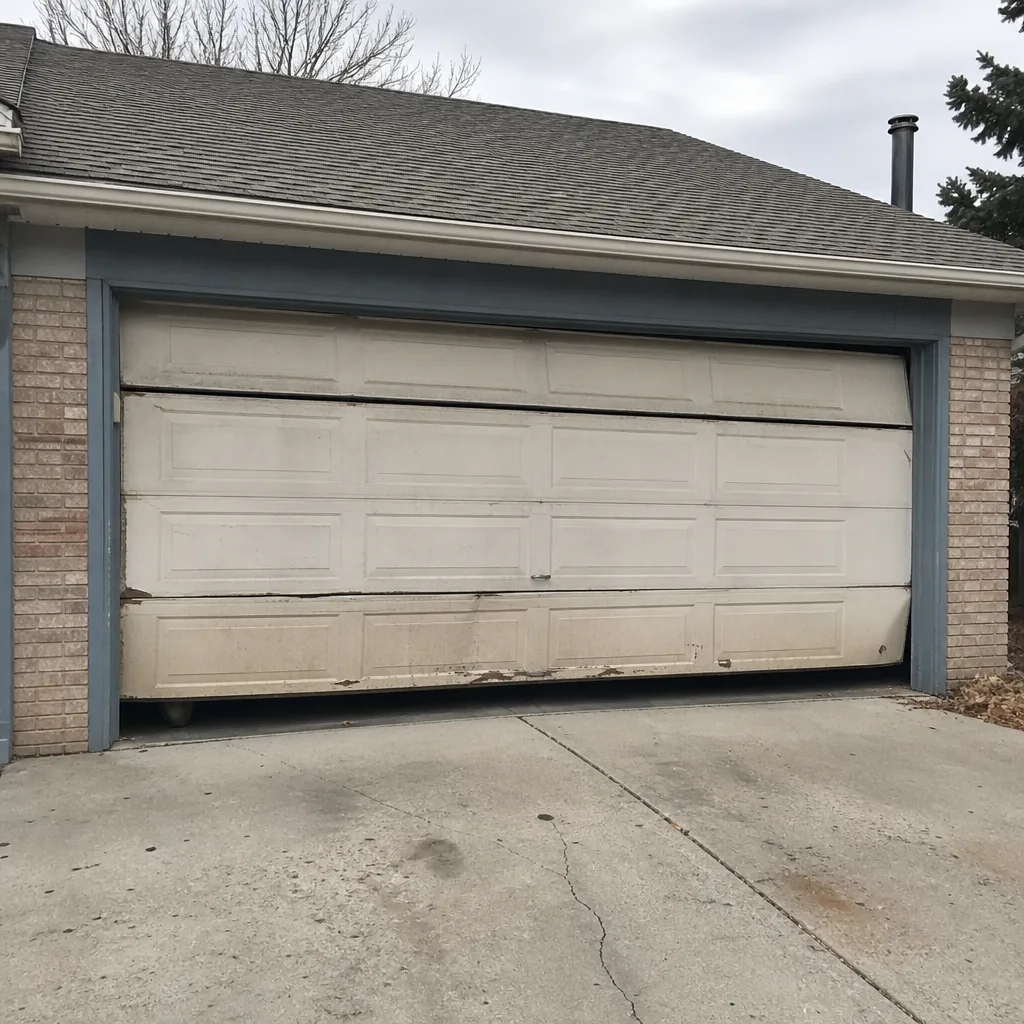 Before
 After
 Before
 After
Common Mistakes to Avoid
- Replacing a single spring in a two-spring setup. Matched pairs wear at the same rate; replacing one leaves the door unbalanced and shortens the life of the new spring. Plan on the pair.
- Using WD-40 on the rollers and hinges. It’s a solvent, not a lubricant, and it attracts dust that turns into grinding paste. Use a garage-door-specific lubricant.
- Pulling the emergency release to “test” a stuck door. If a spring or cable has failed, releasing the door lets several hundred pounds of door fall. Leave it down until a pro has looked at it.
- Bending a track back into shape with the door open. A door moving into a bind can do more damage than the original bend. Assess from the ground, with the door closed and the opener disconnected.
- Ignoring the safety reverse. A door that reverses on its own is telling you the sensors are obstructed or misaligned. Don’t hold the button to force it closed; fix the sensor.
- Assuming a slow opener is “just old.” On lift systems, a slowing door usually means a weakening spring or a dragging track, not a tired motor. Misdiagnosing this as an opener problem is a classic Centennial call – cold-morning stiffness is usually counterbalance, not electronics.
- Skipping the pre-winter check. A Centennial garage door that’s loose in October will be a problem in January. Tightening, lubricating and testing in the fall prevents most of the coldest-season failures.
When to Call a Professional
Call us when any of these are true: you heard a bang and the door won’t lift; the door sags or tilts to one side; you see a frayed or loose cable; the door binds or jams halfway; the opener hums but nothing moves; the door reverses repeatedly and the sensor fix doesn’t stick; or you’ve got a two-spring setup and one has failed. If the door simply needs lubricant or a loose hinge tightened, you can handle that yourself. But if you’re not sure whether the noise you’re hearing is a spring or a track, that’s exactly the point at which a diagnosis is cheaper than a guess. Lockhart Garage Door Service offers free estimates in Centennial – call (844) 834-3842. We answer 24/7. Fast dispatch from 7am to 7pm, Sunday through Friday. Our technicians have up to 9 years of experience, and the price is set per job by the written estimate before any work begins.
Frequently Asked Questions
A broken spring usually makes a loud bang, leaves the door heavy or stuck in place, and shows no visible sag. A broken cable tends to make a snap or clunk, and the door visibly sags or tilts to one side, sometimes with a loose strand near the drum. If you can’t tell, don’t test the door – leave it closed and call. Our team can identify the failure over the phone or on a free estimate visit; call (844) 834-3842.
No. A door with a broken spring should stay closed. The spring is what balances the door’s weight, so lifting it manually or forcing the opener puts hundreds of pounds of force on the door and track – and the counterbalance system is still under tension. Leave the door down and call a professional. We can schedule a repair and confirm what you’re dealing with.
Because Centennial’s cold snaps tighten steel, harden weather seals and expose springs that are near the end of their life. A spring with a little margin left in October will be the one that breaks in January. Cable damage and weather-seal drag also show up more in cold weather. If your door is stiffer than it should be going into winter, that’s the time to get it checked, and a free estimate is a good start – call (844) 834-3842.
Not necessarily. A humming motor with no movement usually points to a stripped gear, a broken chain or belt, or a disconnected trolley – repair items, not full replacement. It’s worth diagnosing before you replace the unit. Our opener specialists work on LiftMaster, Chamberlain, Genie and other common brands and can tell you whether the repair is worth it.
The written estimate is the price. We quote and agree on the cost before any work starts, and if we find something that wasn’t visible during the initial look, we tell you and get your approval before doing anything else. There’s no surprise invoice. Estimates in Centennial are free – call (844) 834-3842.
Cost depends on the number of springs and the door’s configuration. A single spring replacement is priced for one spring; a matched pair is typically replaced together, so a pair costs about twice a single spring. The written estimate sets the final price, and the estimate visit is free. Call (844) 834-3842 for an exact quote.
Same-day service is often available for repairs. We answer the phone 24/7 and dispatch from 7am to 7pm, Sunday through Friday, closed Saturday. Call (844) 834-3842 and we’ll confirm the earliest opening for your Centennial address.
Yes – our technicians are licensed and insured, and the repair is done by a professional, not outsourced. That’s part of why we stand behind installed or repaired work. If you have questions about the credentials before you book, call (844) 834-3842.
The Bottom Line
Nearly every garage door problem that gets misdiagnosed has a simple root cause: the symptom was treated instead of the system. Watch the door’s movement, listen to the noise, and note the opener’s response – those three signals will point you to a spring, a cable, a track, a sensor or an opener every time. In Centennial, the climate makes winter the season when weak springs and cold-stiffened cables fail, so a fall inspection and a springtime lubrication check are the cheapest insurance you have. For anything involving a spring or a cable, the answer is always the same: leave the door closed and call a professional. That’s how a repair gets done once instead of twice.
If you’re not sure what’s going on with your door, call Lockhart Garage Door Service at (844) 834-3842 for a free estimate. We work on whatever brand is on your house, from the smallest sensor to a full spring replacement, and you’ll know the price before we start.
Written by the team at Lockhart Garage Door Service.