
Last updated November 15, 2026
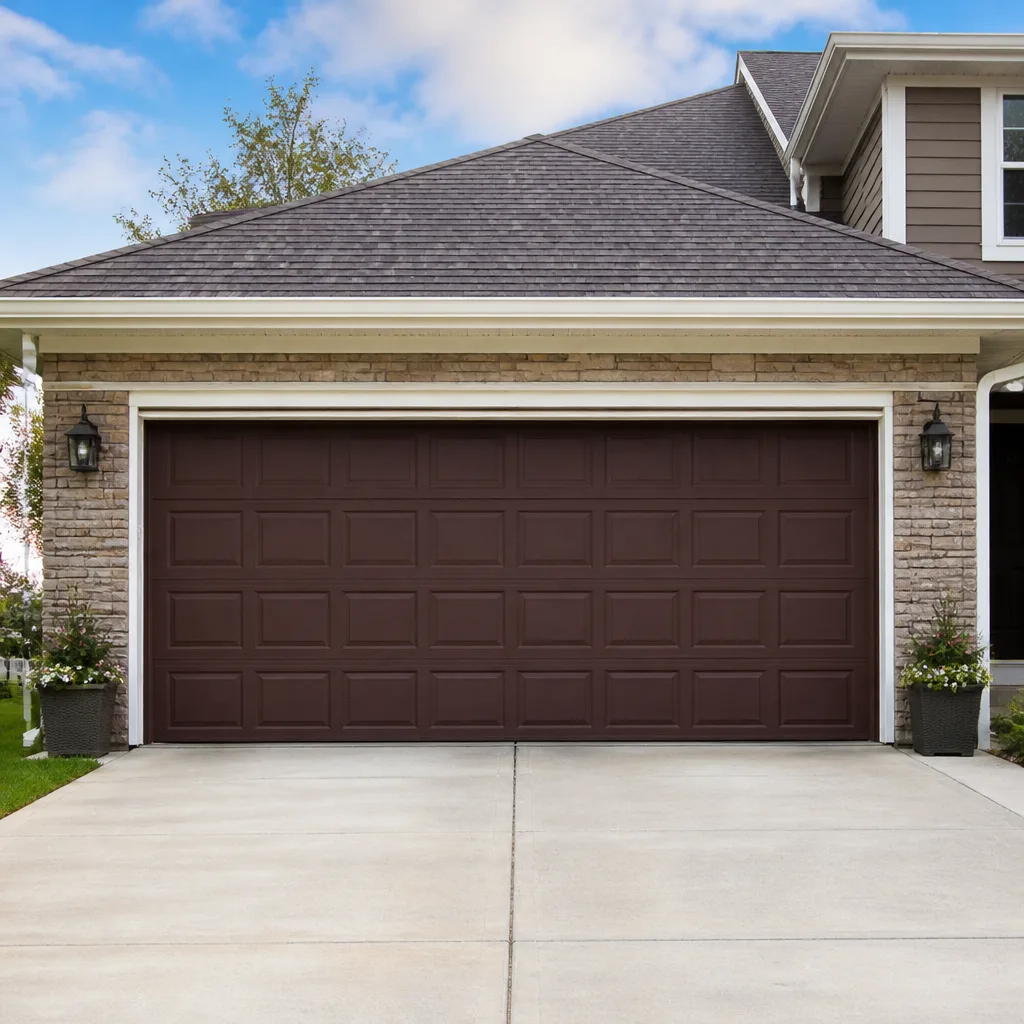 Raised-panel steel
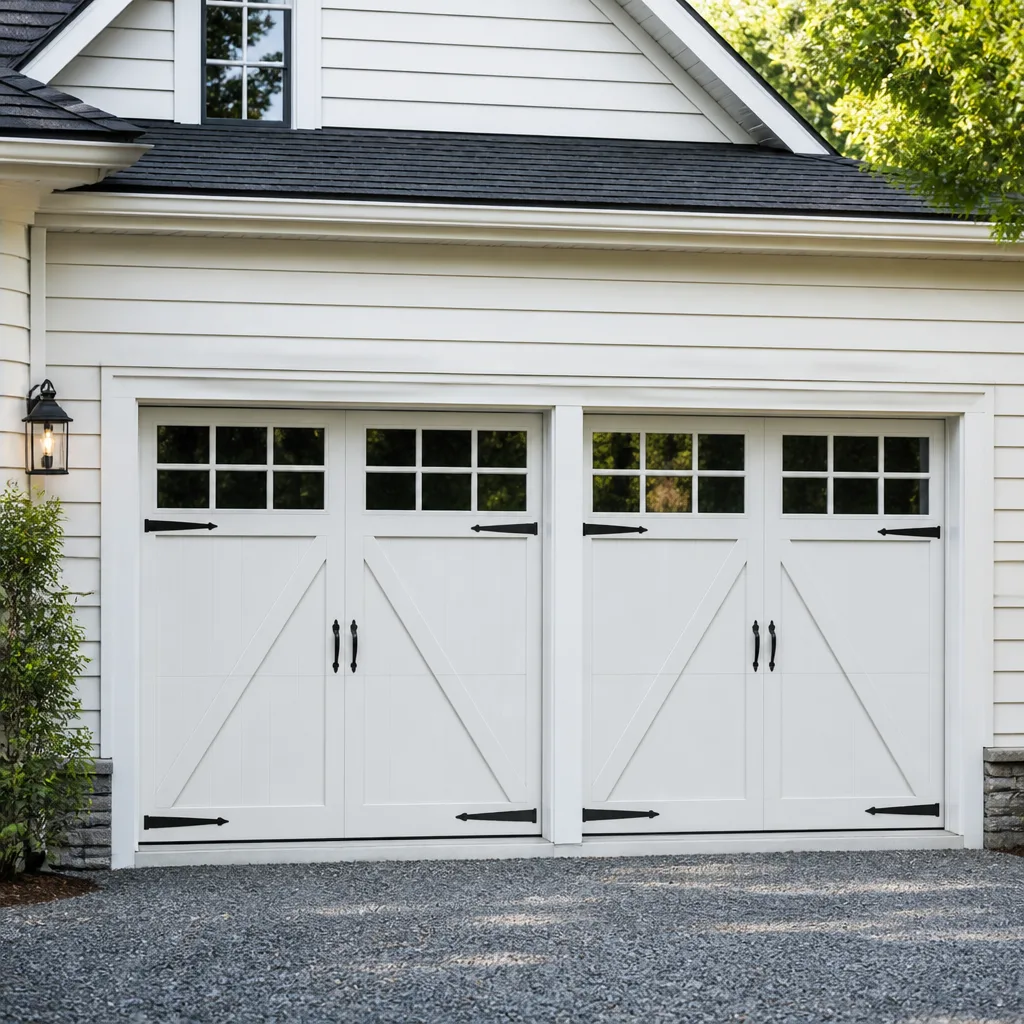 Carriage house
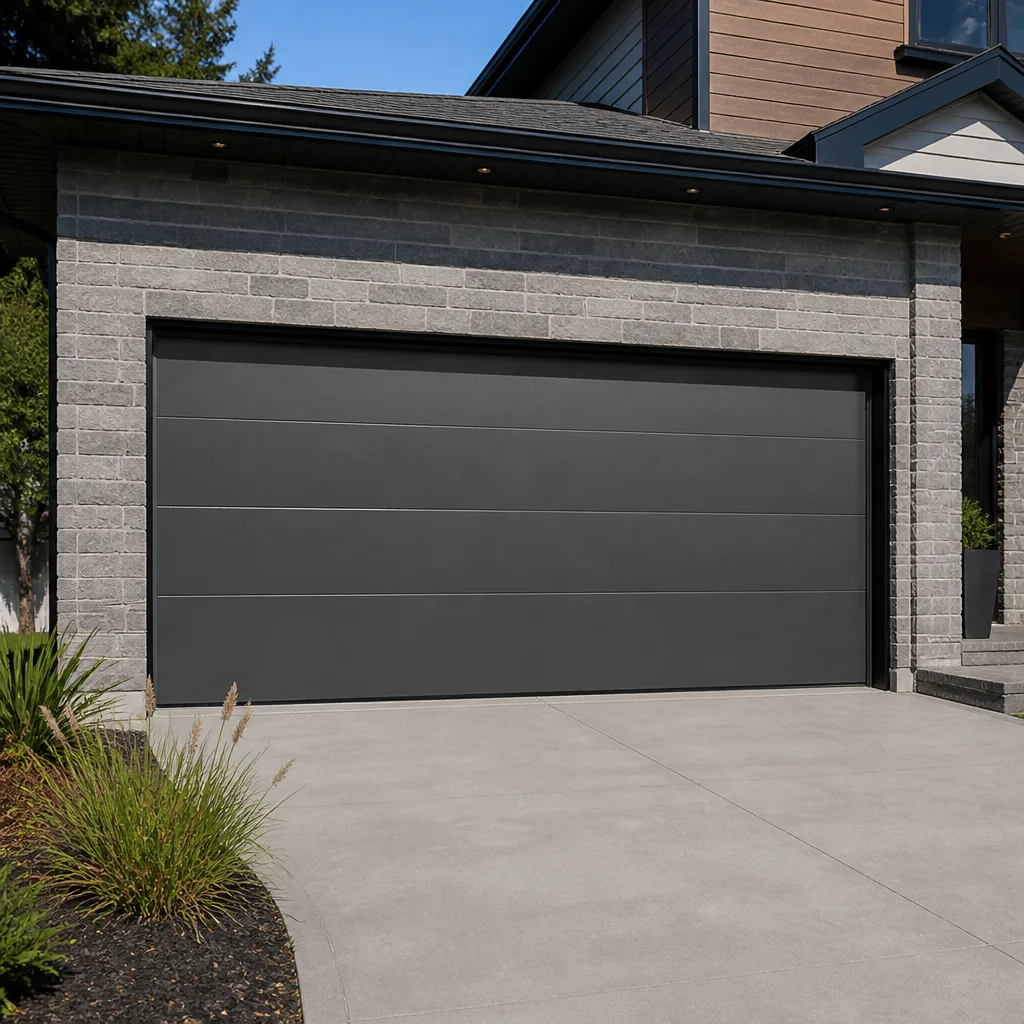 Modern flush
 Full-view glass
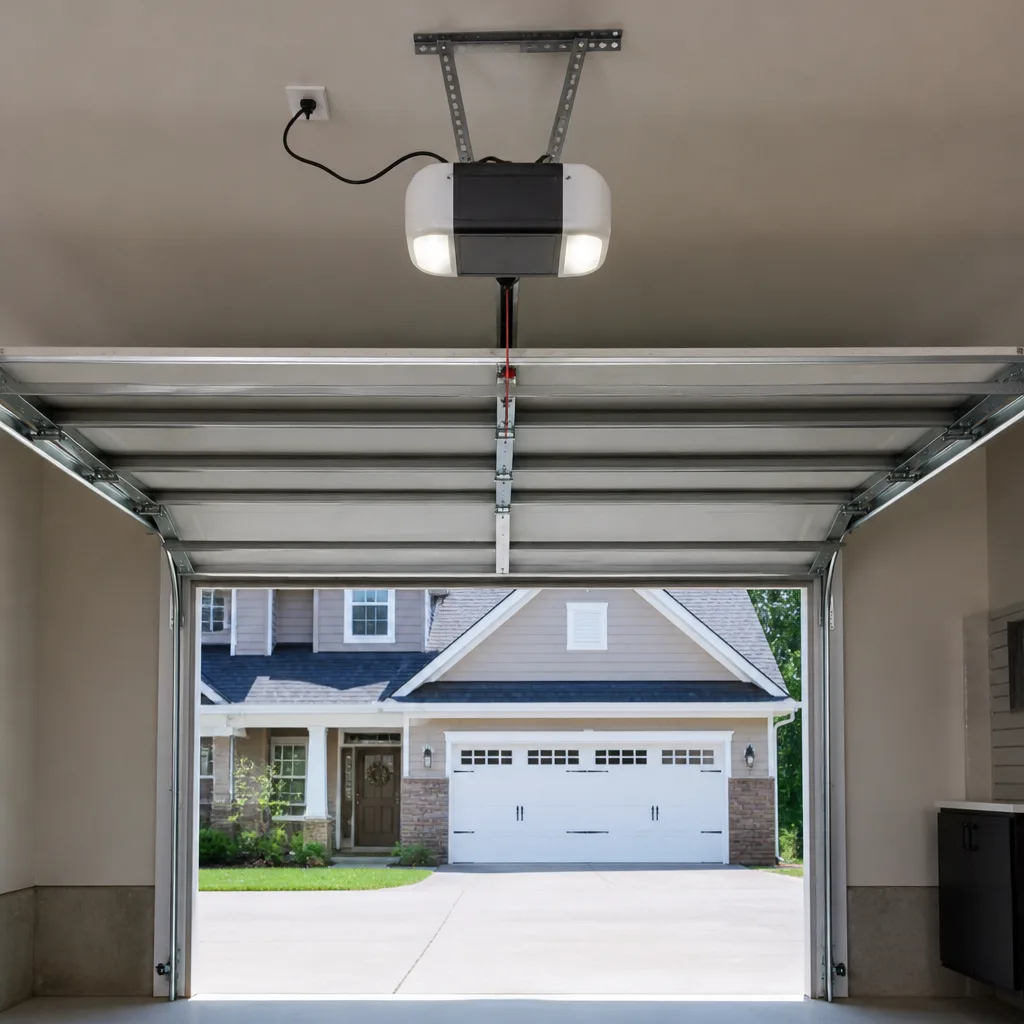 LiftMaster openers
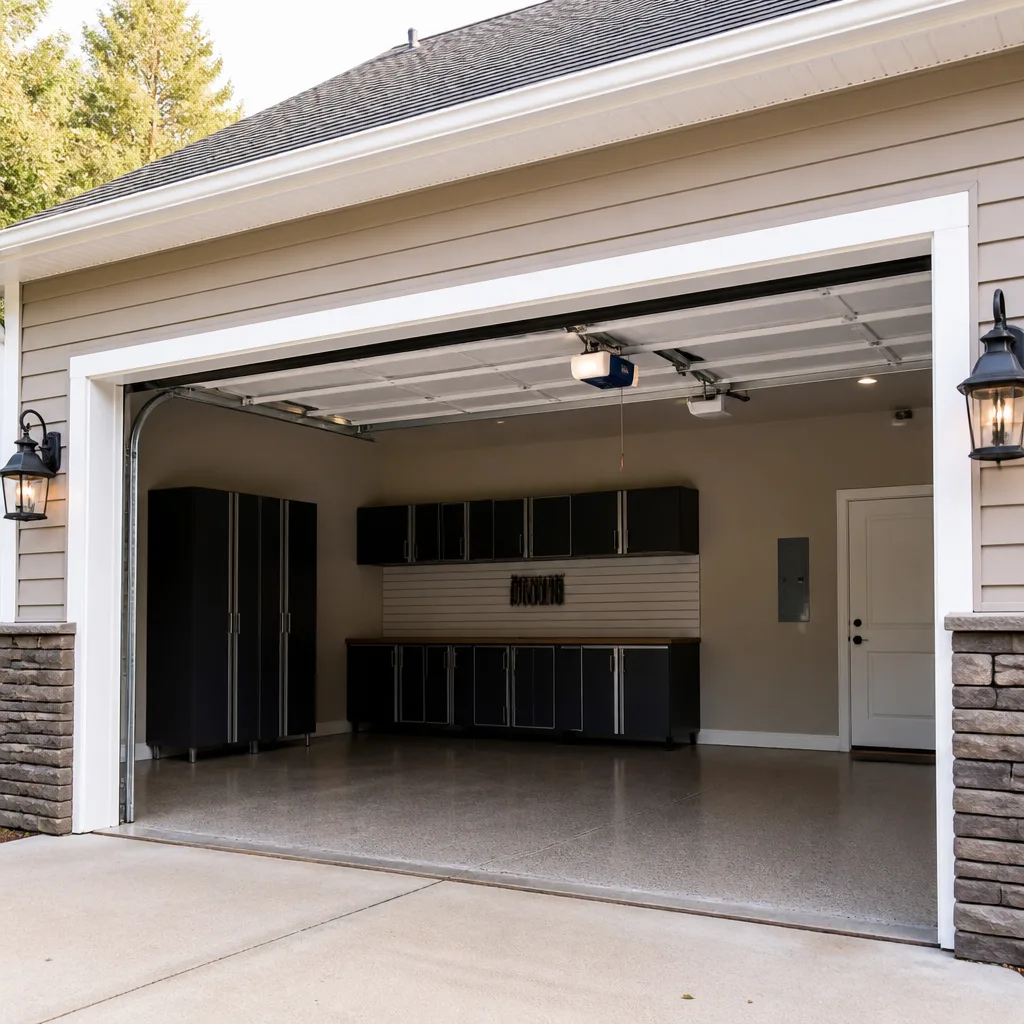 Chamberlain openers
Full 25-point door and opener safety check with every visit - springs, cables, rollers, tracks, and your LiftMaster or Chamberlain opener included
You get a price before we start. It does not change when the pro arrives.
Get your free estimateHow to Hire a Garage Door Contractor in Centennial: A Step-by-Step Guide
Most homeowners shop for a garage door contractor the same way they shop for a plumber: cheapest quote, soonest slot. That filter fails here. A surprising number of “garage door companies” listed in the Denver metro are lead-generation fronts that collect your address and dispatch whichever subcontractor is free, which means the person who pulls into your driveway may never have touched your opener brand before. Garage doors are a narrow trade with brand-specific electronics and hardware, and the right question isn’t who’s cheapest. It’s who actually knows your equipment. This guide walks through the exact steps to hire a garage door contractor in Centennial, from verifying a Colorado license to reading a quote line by line, so you can tell a specialist from a dispatcher before anyone shows up.
Quick Answer
To hire a garage door contractor in Centennial, verify that the company holds a valid Colorado contractor license, confirm it services the specific brand of door and opener already on your house, and ask for an itemized written quote that separates parts from labor before any work begins. A legitimate contractor will name your hardware, explain the failure point, and put the price in writing. A dispatcher will ask for your address and promise to “send someone out.”
Styles & brands we work with
- Raised-panel steel
- Carriage house
- Modern flush
- Full-view glass
- LiftMaster openers
- Chamberlain openers
Table of Contents
- Know What You’re Actually Hiring For
- Questions to Ask Before You Book
- How to Verify a Colorado Contractor License
- Why Brand Fluency Matters for Doors and Openers
- How to Read a Garage Door Quote
- What a Legitimate Service Call Looks Like
- Repair or Replace: Asking the Right Question
- Centennial-Specific Hiring Notes
Know What You’re Actually Hiring For
A garage door system has two distinct halves, and they fail for different reasons. Understanding that split before you call anyone makes the whole hiring process sharper, because you’ll know which specialist you need and what a fair quote should cover.
The first half is mechanical: springs, cables, rollers, hinges, tracks, and the door panels themselves. Springs carry the door’s weight and do the heavy lifting; when one breaks, the door becomes dangerous to operate. Panels take the daily wear of opening and closing. The second half is electronic: the opener motor, the logic board, the safety sensors, and the wall controls. These fail in ways that have nothing to do with the door’s physical movement.
Here’s why that split matters when you hire. A company that only installs new doors will almost always steer a repair toward replacement, because installation is their business. A handyman who does a bit of everything may handle a bent track but won’t have the diagnostic background to trace a blinking opener code back to a failing logic board. The right contractor handles both halves, and treats them as one system. Garage doors are all we do at Lockhart Garage Door Service, which is why we can diagnose an opener drift without guessing at the door, and inspect a door’s balance without blaming the motor.
In our experience, the most common misdiagnosis we see corrected is a door that reverses on the way down being blamed on the opener, when the actual fault is a misaligned track or a stretched cable creating resistance the opener reads as an obstruction. A specialist catches that in minutes. A generalist replaces the opener and the problem returns.
The Three Services Any Legitimate Contractor Should Cover
- Garage door repair – springs, cables, rollers, hinges, tracks, panels, and balance issues
- Opener repair and diagnostics – motors, logic boards, safety sensors, remotes, wall controls
- Garage door installation – full replacement and new-door installation across major brands
If a company can only do one of those three, that’s not disqualifying, but you should know which lane you’re in before you call. Ask directly: “Do you repair openers as well as doors?” If the answer is a pause, keep looking. When you’re ready to see how whole-system repair works, our garage door repair team handles the mechanical side, and opener diagnostics are a dedicated service of their own.
Questions to Ask Before You Book
The best filter for separating a local specialist from a dispatched generalist is a five-minute phone conversation. These questions are designed to reveal whether the person on the other end actually understands garage doors or is reading from a call-center script. Ask them before you give out your address.
- “What brand and model is on my door and my opener?” A specialist will ask you to read the model plate or send a photo and will recognize the brand immediately. A dispatcher won’t care, because they’re handing the job to whoever answers.
- “Who actually shows up? Is it your technician or a subcontractor?” This is the single most revealing question. If the answer is vague, you’re talking to a lead-generation front. Full-spectrum service under one company means no subcontracting ambiguity.
- “Can you give me an itemized quote before work starts?” Parts and labor should be separated. If they won’t itemize over the phone, that’s a data point.
- “What’s your Colorado contractor license number?” A real local company answers this without hesitation.
- “Is the price I’m quoted the price I pay?” The written estimate should set the price. You want to hear that confirmed, not deflected.
- “How will you diagnose the opener?” A specialist describes a diagnostic process: testing sensors, reading codes, checking balance and travel limits. A dispatcher says “we’ll take a look.”
Write the answers down. A company that scores well on questions one, two, and six is almost certainly a specialist. A company that stumbles on two or more is likely a dispatch center, and the technician who arrives may have never worked on your equipment.
How to Verify a Colorado Contractor License
Colorado does not license garage door contractors under a single statewide specialty classification the way some states do, so verification takes a couple of specific steps rather than one look-up. Do them anyway. They’re quick, and they separate a real company from a website.
- Ask for the company’s general contractor registration. In Colorado, a company doing this work should be able to produce a current registration with the state. Ask for the number and confirm it with the state licensing authority.
- Check local Centennial and Arapahoe County requirements. Depending on the scope of the work, local rules may apply. Call the city’s building department and ask what’s required for a garage door replacement or a structural modification, and whether a permit is needed. We can’t tell you a specific permit rule for your address; the building department can.
- Confirm liability insurance and workers’ compensation. Ask for a certificate of insurance naming the company. If a technician is injured on your property without coverage, the exposure can land on you. A real company will send the certificate without argument.
- Confirm the person arriving is covered. If a subcontractor shows up, the insurance and license status you verified may not apply to them. This circles back to question two above.
- Ask what the license actually covers. A general registration doesn’t certify garage door competence. The license confirms the business is legitimate; the brand knowledge is what confirms the technician is competent. You need both answers.
A company that hesitates on any of these is telling you something. On the trade’s more dangerous work, like spring and cable repair, competence isn’t a formality; it’s the difference between a safe door and an injury. That’s why a specialist confirms the danger plainly and never walks a homeowner through a DIY spring replacement.
Why Brand Fluency Matters for Doors and Openers
Openers are the most failure-prone and fastest-changing part of a garage door system, and each major brand has its own logic codes, sensor behavior, and remote pairing process. A technician who works across brands diagnoses faster and calls back less. A technician who only knows one product line will either guess or sell you what they carry.
Consider how differently failures present. LiftMaster and Chamberlain share a manufacturer lineage and many of their diagnostic codes and sensor behaviors overlap, so a technician fluent in both moves quickly between them. A Genie opener with a chain drive and a different sensor alignment tests differently. A Craftsman unit from the entry-level tier behaves differently again. On the door side, Wayne Dalton and Raynor use different spring configurations and hardware than a premium Clopay or Amarr panel. Recognizing the hardware on sight cuts diagnostic time and reduces the chance of a callback.
This is the brand-fluency test, and you can run it over the phone: describe your door and opener by brand and ask a follow-up question that only a specialist could answer, like “my LiftMaster remote pairs but the wall button doesn’t work, does that point anywhere?” A specialist will engage with the symptom. A dispatcher will change the subject.
How to Confirm Brand Certification vs. Brand Familiarity
- Ask whether they’re a certified dealer or simply experienced with the brand. These are different claims. Certification is a manufacturer program; familiarity is trade experience. Both are useful, but you should know which you’re hearing.
- Ask what brands they service, not just what they sell. A company that names specific brands across price tiers (entry-level through premium) is signaling real parts familiarity.
- Ask about parts availability. A specialist knows which parts are commonly available and which require ordering, which affects your timeline on installation work.
Opener repair deserves its own callout here, because it’s the component most often treated as an afterthought. Your opener, diagnosed right, saves you from a door replacement you didn’t need. We treat garage door opener repair as a dedicated service for exactly that reason, and it’s why brand fluency across LiftMaster, Chamberlain, Genie, Clopay, Amarr, Wayne Dalton, Craftsman, and Raynor isn’t a marketing line. It’s the difference between diagnosing your problem and selling you a solution.
How to Read a Garage Door Quote
A fair garage door quote is itemized, separates parts from labor, and puts the total in writing before work begins. Anything less gives the contractor room to adjust the number once the door is apart and you have no options. Read the quote against the checklist below.
- Parts and labor listed separately. This lets you see what the hardware actually costs versus the skill and time. A single lump sum tells you nothing about whether the pricing is reasonable.
- Specific part identification. “Spring replacement” isn’t enough. The quote should state spring type and configuration, because a pair of springs is a different job than one. A quote for a single spring and a quote for a matched pair are not comparable, so make sure you know which you’re getting.
- Explicit scope. What’s included, what isn’t, and what triggers additional cost. If the technician finds a bent track while replacing a spring, does the quote cover it? Ask before they start, not after.
- Written confirmation that the quoted price is the price. The written estimate sets the final price. If that sentence isn’t in the quote, ask for it in writing.
- No same-day pressure. A contractor who pressures you to approve on the spot, before you’ve had a chance to read the quote, is a red flag. You should be free to read it, ask questions, and decide without a deadline looming.
The second fear most homeowners have, right after the breakdown itself, is the invoice at the end. The way to eliminate it is a written quote that says what’s covered and confirms the price you agreed to is the price you pay. Prices are estimates set per job, and the written estimate is the final word. Get it before the technician touches a single spring.
What a Legitimate Service Call Looks Like
A professional service call follows a recognizable sequence, and knowing that sequence lets you spot when shortcuts are being taken. From arrival to invoice, here’s what should happen on a garage door repair in Centennial or anywhere in the metro.
- Arrival and introduction. The technician identifies themselves and the company, confirms the problem you called about, and asks what you’ve noticed. They should already know your brand from the booking.
- Full-system inspection before any diagnosis. Both halves get checked: door balance, spring tension, cables, rollers, tracks, and panels on one side, and opener motor, sensors, travel limits, and safety reversal on the other. A technician who only looks at the part you mentioned is likely to miss the root cause.
- Diagnosis explained in plain language. You should hear what failed, why, and what the options are. Not a pitch. A diagnosis.
- Written quote presented before work begins. Parts and labor, itemized, priced. You approve it, and only then does work start.
- Work performed safely and correctly. Springs and cables are handled with proper tools and technique. Safety sensors are re-tested. The door is cycled and checked for balance and reversal.
- Final test and walkthrough. The technician operates the door, confirms the fix, and walks you through what was done.
- Itemized invoice matching the quote. The final invoice should mirror the approved quote. If it doesn’t, ask why before you pay.
Any deviation from this sequence is worth questioning. A technician who starts work before presenting a quote, who replaces parts without explaining why, or whose invoice doesn’t match the approved number is showing you their process. Watch for it.
Repair or Replace: Asking the Right Question
Repair is usually the right call when the failure is a single component: a spring, an opener, a sensor, a roller. Replacement makes sense when the door’s structure is compromised or the cost of repair begins to approach the cost of a new installation. The trick is that a company selling installations has an incentive to reach the replacement conclusion sooner.
Here’s the question that cuts through it: “If this were your door, would you repair or replace it, and what specifically makes the difference?” A specialist will give you a reason grounded in the hardware, like “the panels are solid and the springs were replaced recently, so a new opener solves it.” A replacement-first company will give you a reason grounded in cost, like “you’re better off putting that money toward a new door.”
On a new installation, the same brand-fluency filter applies. Ask what brands are available and why they’d recommend one over another. A company that names specific brands across price tiers (Clopay, Amarr, Wayne Dalton, and Raynor among them) and explains the difference in construction is signaling real product knowledge. A company that offers one brand at one price point is selling inventory, not guidance. When the work is done well, installed or repaired, we stand behind it, and that only holds if the recommendation was the right one in the first place. For a full replacement, our garage door installation service covers the full range.
Centennial-Specific Hiring Notes
Centennial sits in the south Denver metro, and the housing stock here shapes what a garage door contractor deals with. A lot of the neighborhoods across Centennial, from Foxridge to Willow Creek and up through the Cherry Creek corridor, were built across several decades, which means a single street can have doors from different eras and different manufacturers running side by side. A specialist working in Centennial needs to be fluent across older and newer hardware, not just today’s model line.
The Front Range climate adds its own wear pattern. The swing between dry cold snaps and warm stretches, plus the freeze-thaw cycles through the colder months, works on door seals, tracks, and springs. Winter mornings are hard on a door’s balance; summer heat can affect how a track settles. A contractor who works in Centennial regularly will recognize these patterns and account for them in a diagnosis rather than treating every failure as a one-off.
Centennial’s proximity to Denver also means the local market is crowded with companies based in other cities that market here. That’s not a knock on any of them, but it’s exactly the condition that produces lead-generation dispatch centers. When you hire in Centennial, ask where the technician is coming from and who they work for. The answer tells you a lot.
What Local Homeowners Should Check on Any Centennial Quote
- Colorado registration and insurance verified before the appointment, not after
- Local building department contacted for any permit question on a replacement or structural work
- Brand recognition confirmed for whatever door and opener you already have
- Written itemized quote secured before work begins
If you’re comparing contractors and want a starting point, our Centennial page lays out what we cover locally.
Common Mistakes to Avoid
- Booking with the first company that answers. The fastest company to pick up is often a dispatcher, not a specialist. Ask the questions before you commit to a slot, not after the technician is on the way.
- Skipping the license and insurance check. It takes a few minutes and protects you from the worst outcome: an uninsured technician injured on your property. Verify before the appointment.
- Accepting a verbal quote. A number over the phone isn’t a quote. Get it in writing with parts and labor separated, before anyone starts work.
- Approving work under same-day pressure. No legitimate contractor needs you to decide before you’ve read the quote. If you feel rushed, that’s the reason to slow down.
- Assuming your opener brand doesn’t matter. A technician who hasn’t worked on LiftMaster or Genie or Chamberlain before will take longer to diagnose and is more likely to guess. Brand fluency shortens the job and reduces callbacks.
- Calling a handyman for a spring or opener fault. Springs and opener diagnostics are a specialist’s work. A generalist may handle a bent track; a broken spring is a different level of risk.
- Not asking who actually shows up. This is the red flag that hides in plain sight. If the company won’t confirm that the technician is theirs, you’re hiring a stranger through a middleman.
See the difference
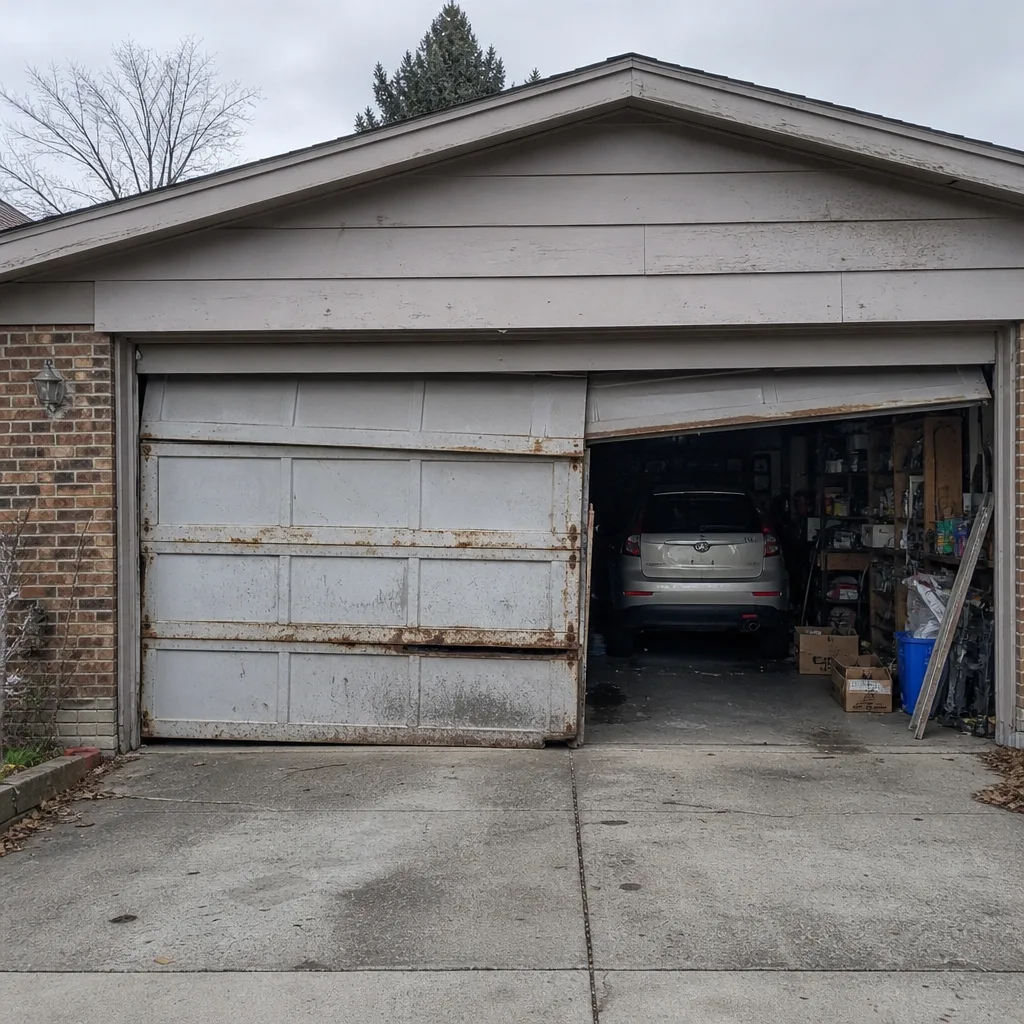 Before
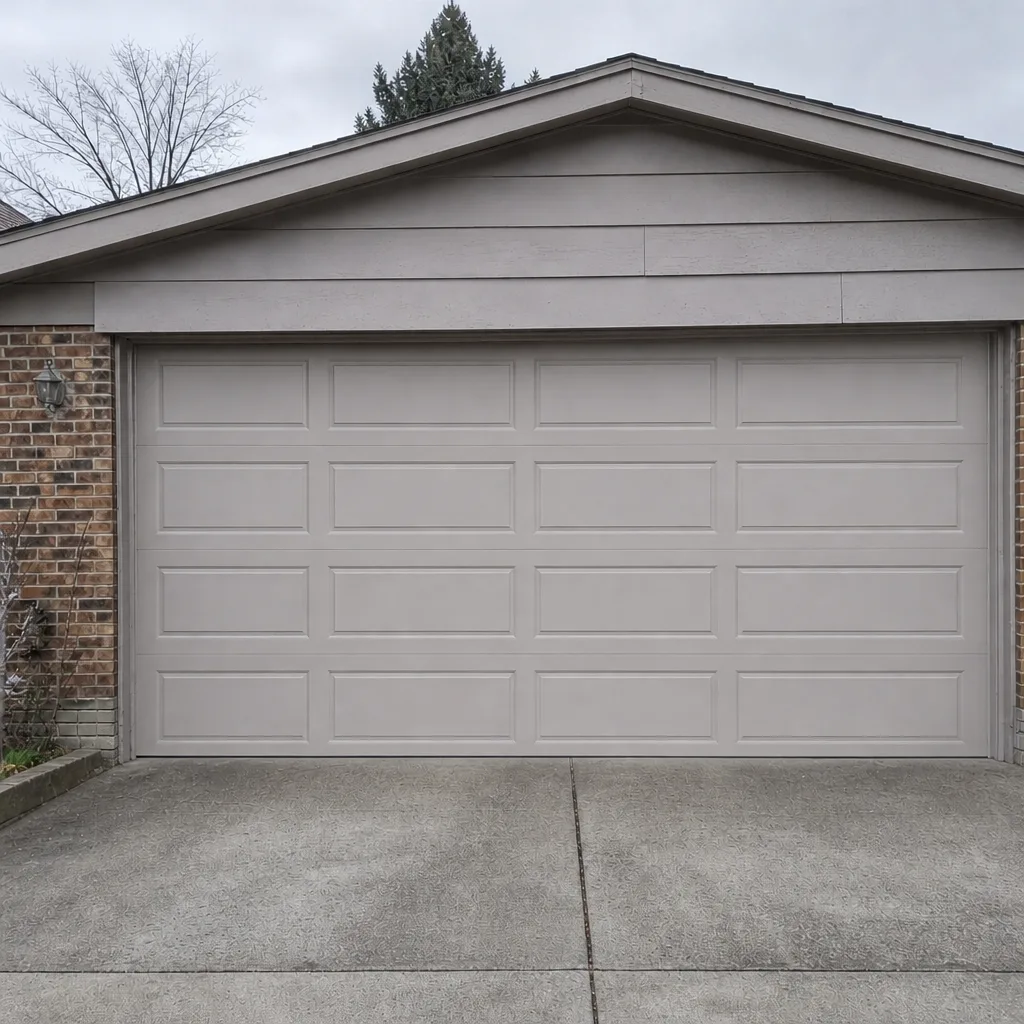 After
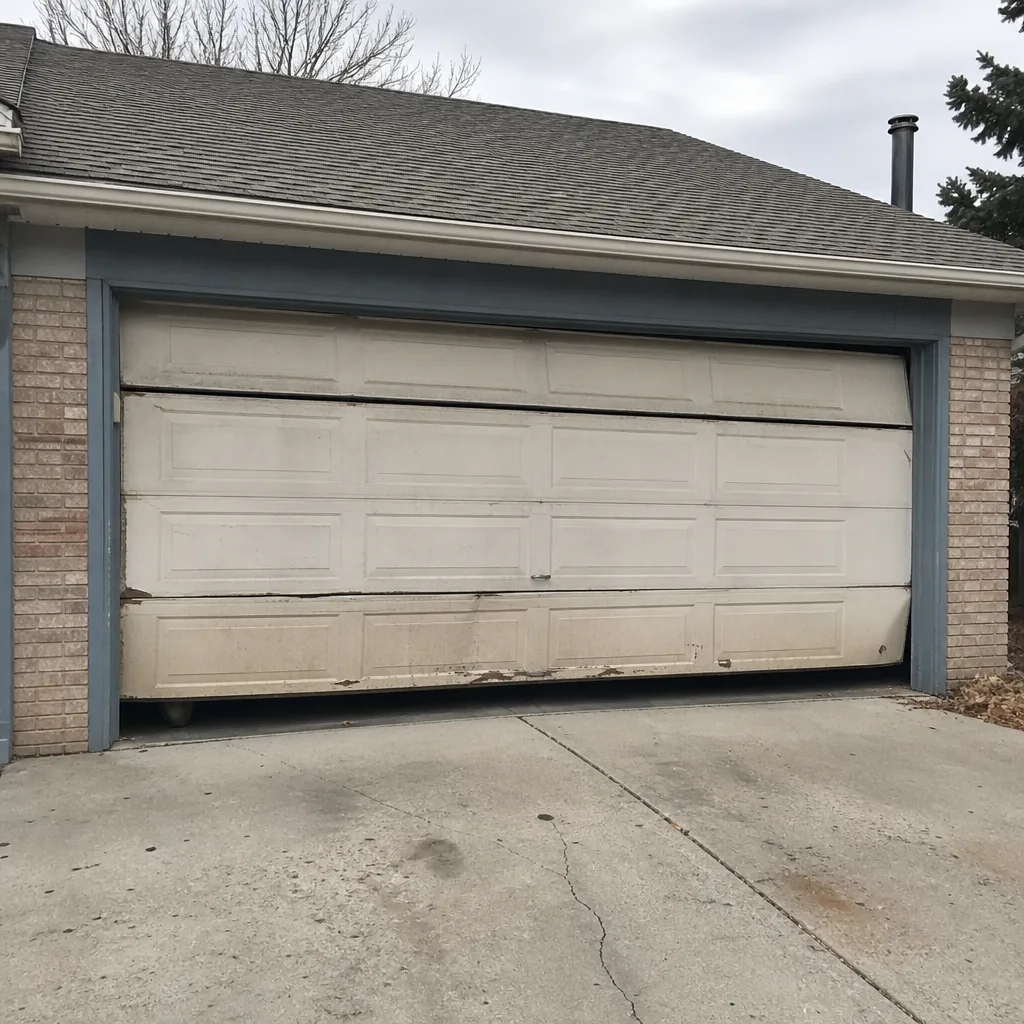 Before
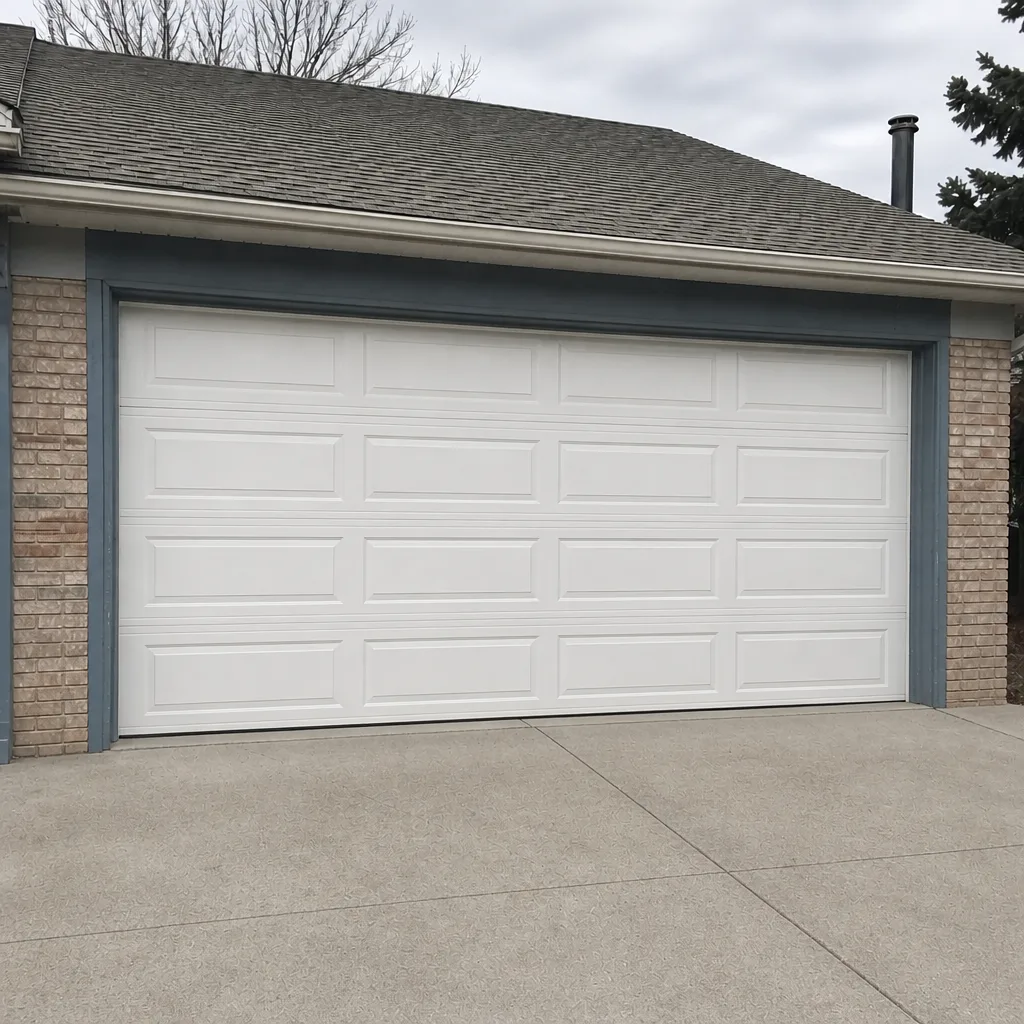 After
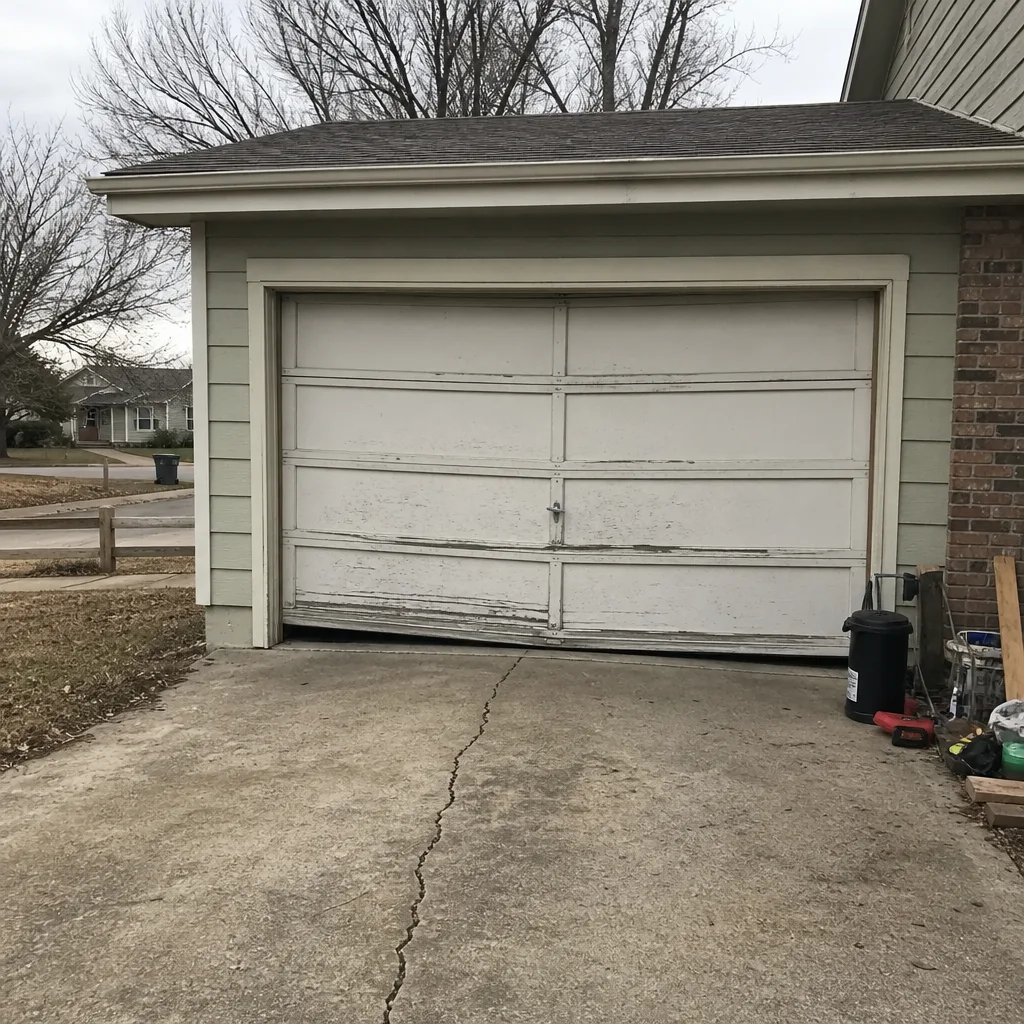 Before
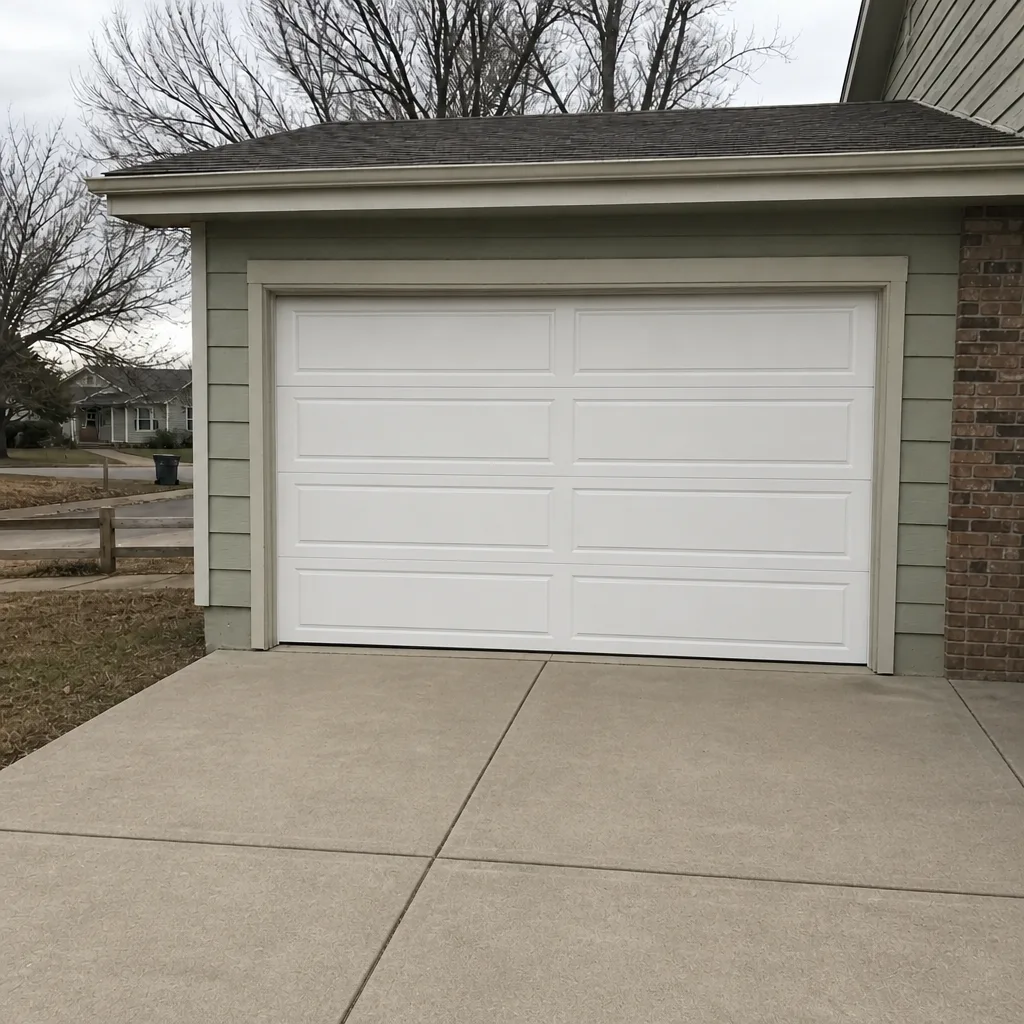 After
When to Call a Professional
Some garage door problems are safe to observe and some are not. Call a professional when a spring is broken (the door becomes dangerous to lift, and a DIY spring replacement can cause serious injury), when the door reverses on its own or won’t close, when the opener runs but the door doesn’t move, when a cable is visibly frayed or off its drum, or when the door is visibly out of balance and won’t stay half-open. Also call when an opener throws a diagnostic code you can’t identify, or when a door has been struck and the panels or track are bent. These are all cases where the wrong diagnosis costs more than the right call. Lockhart Garage Door Service offers free estimates in Centennial. Call (844) 834-3842. We answer 24/7. Fast dispatch from 7am to 7pm, Sunday through Friday, and we’re closed on Saturday. Our technicians have up to 9 years of experience, and they work on your brand, not just ours.
Frequently Asked Questions
A legitimate garage door company in Centennial can provide a current Colorado contractor registration, a certificate of insurance, and a specific answer about who will show up at your door. Ask all three before you book. If the company can’t confirm that the technician is theirs rather than a subcontractor, you’re likely dealing with a dispatch center rather than a local specialist.
Colorado requires a general contractor registration for many construction trades, and you should ask any company for its current registration and confirm it with the state licensing authority. Depending on the scope, local Centennial and Arapahoe County rules may also apply. Call the city’s building department to ask what’s required for your specific job; the license confirms the business is legitimate, but the brand knowledge confirms the technician is competent.
The brand matters because each opener manufacturer has its own diagnostic codes, sensor behavior, and remote pairing process. A technician fluent in LiftMaster, Chamberlain, Genie, and the other major brands diagnoses your problem faster and is less likely to replace a part that isn’t the cause. A technician who only knows one product line will either guess or sell you what they carry.
Garage door repair in Centennial is priced per job by a written estimate, and we don’t quote a range over the phone because the variables are too great. What we can tell you is that the estimate is free and the written quote sets the final price before any work begins. Parts and labor are itemized so you can see exactly what you’re paying for. Call (844) 834-3842 for a free estimate.
The main red flags in a garage door quote are vague line items that don’t separate parts from labor, a refusal to itemize at all, pressure to approve same-day before you’ve read it, and a total that isn’t written down. A fair quote is itemized, specific about parts, and confirms in writing that the quoted price is the price you pay. If any of those are missing, ask for them before work starts.
Same-day garage door repair in Centennial depends on the day and the open slots, and we’ll tell you honestly at the time you call. We answer the phone 24/7, with fast dispatch from 7am to 7pm, Sunday through Friday. We’re closed on Saturday. Call (844) 834-3842 and we’ll let you know what’s available.
The Bottom Line
Hiring a garage door contractor in Centennial comes down to a few checks: confirm the company is licensed and insured in Colorado, confirm the technician who shows up works for that company and not a subcontractor, confirm they know the brand of door and opener you already have, and get an itemized written quote before any work begins. The price is quoted and agreed before the job starts, and the written estimate sets the final number. Do those four things and you’ve filtered out most of the dispatch centers and replacement-first companies operating in the metro. The rest comes down to competence, and competence shows in whether they recognize your hardware on sight. If you want that check run on your door, call Lockhart Garage Door Service at (844) 834-3842 for a free estimate. We answer 24/7, with fast dispatch from 7am to 7pm, Sunday through Friday. If your door fails on a Saturday, call us and we’ll book you for Sunday.
For a full picture of how we work, start at Lockhart Garage Door Service.
Written by the team at Lockhart Garage Door Service.