
Last updated November 15, 2026
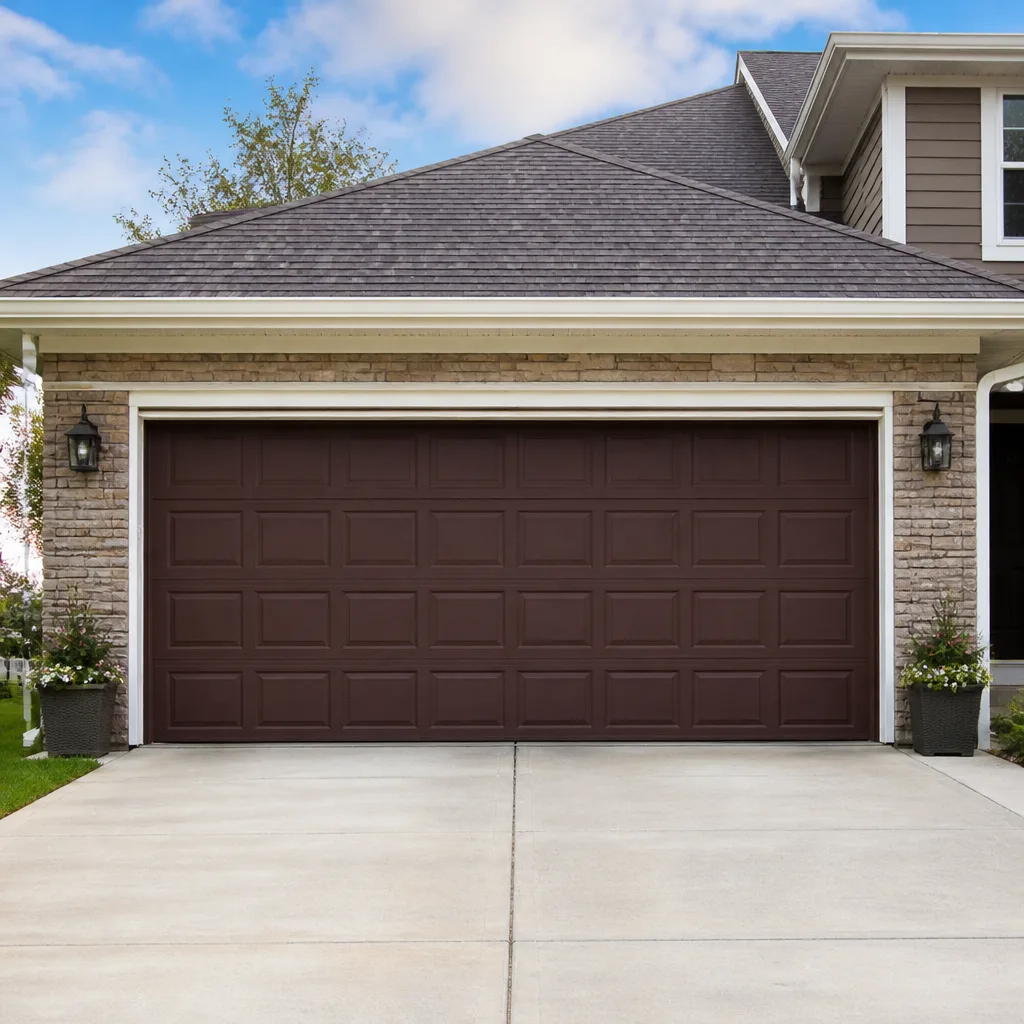 Raised-panel steel
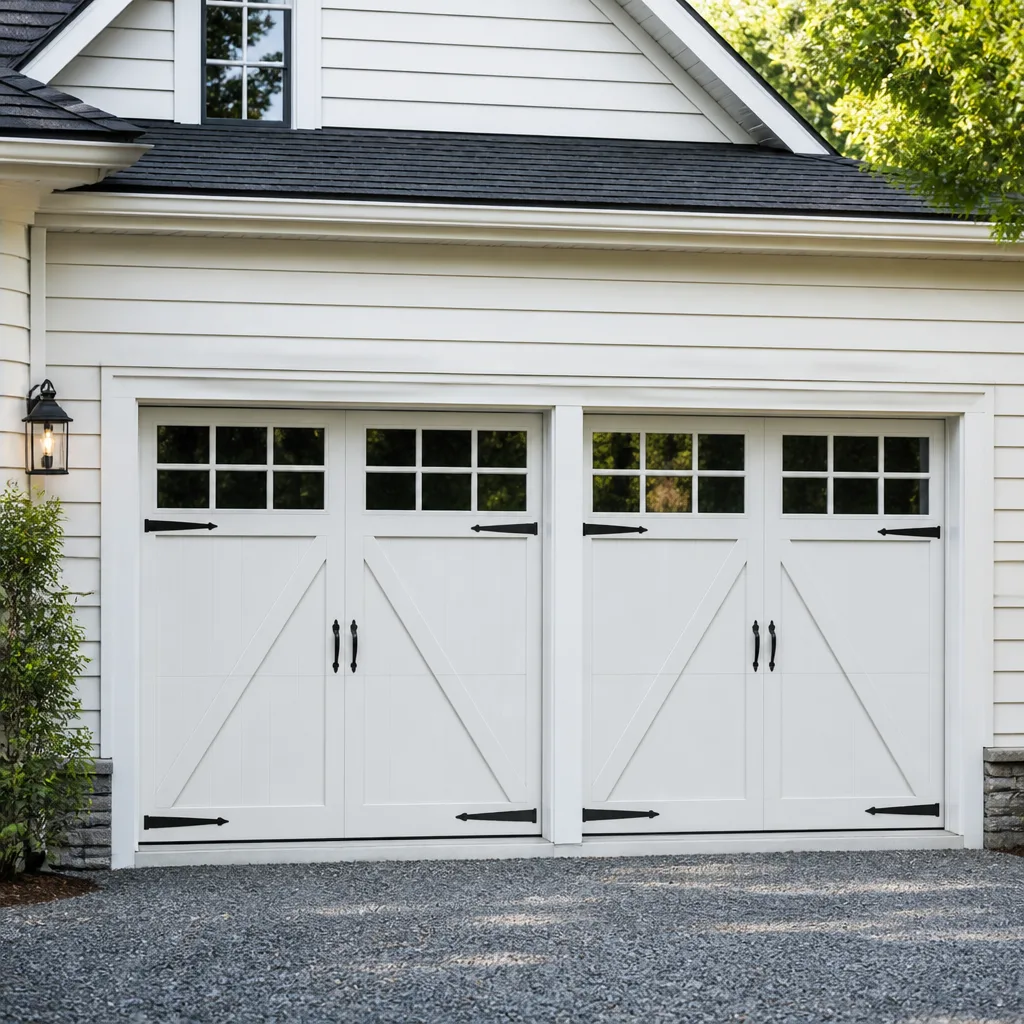 Carriage house
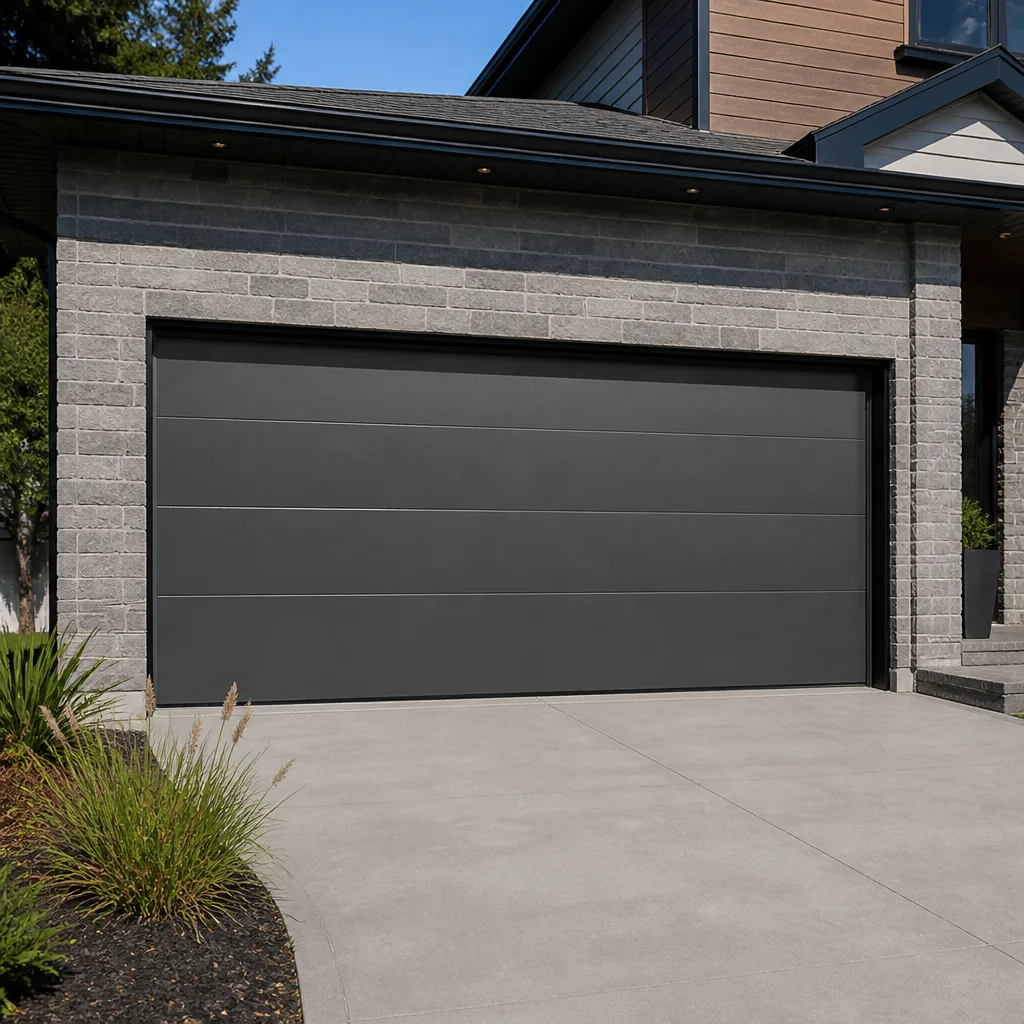 Modern flush
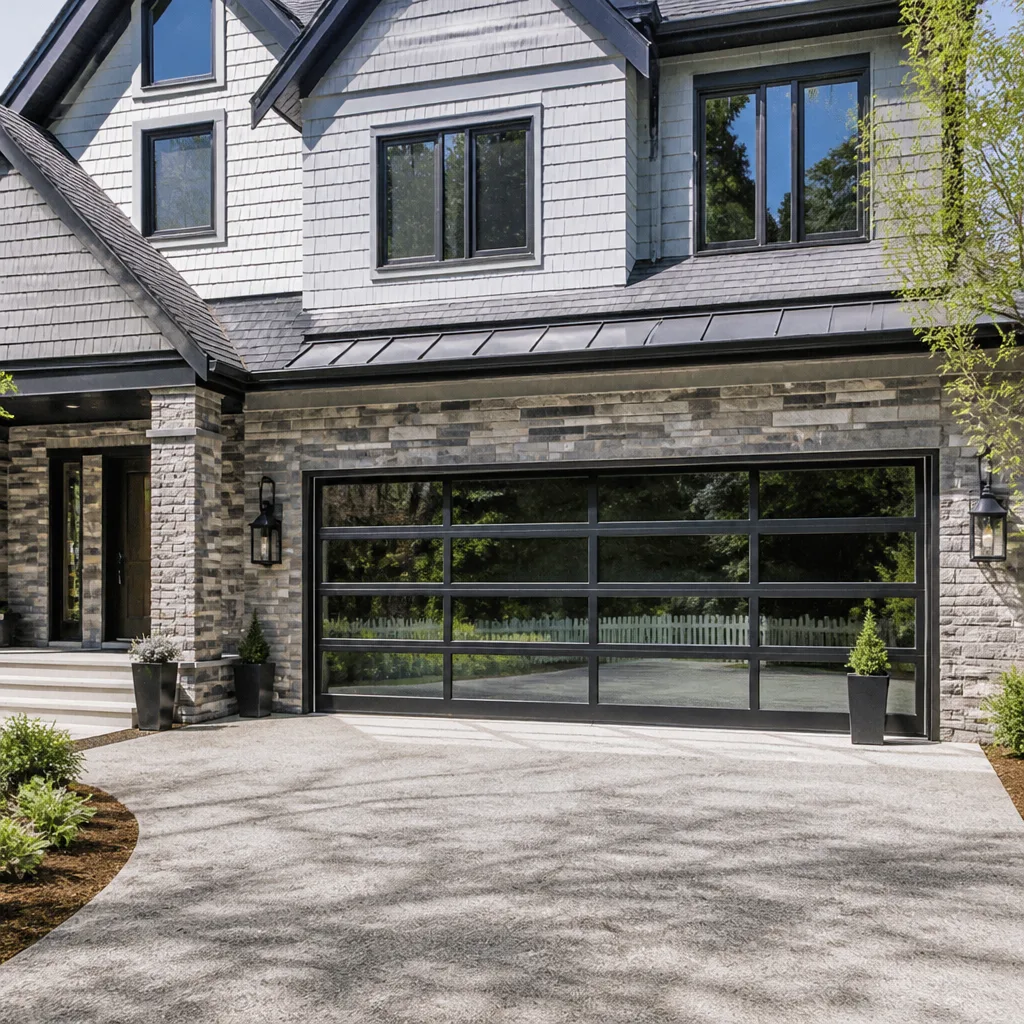 Full-view glass
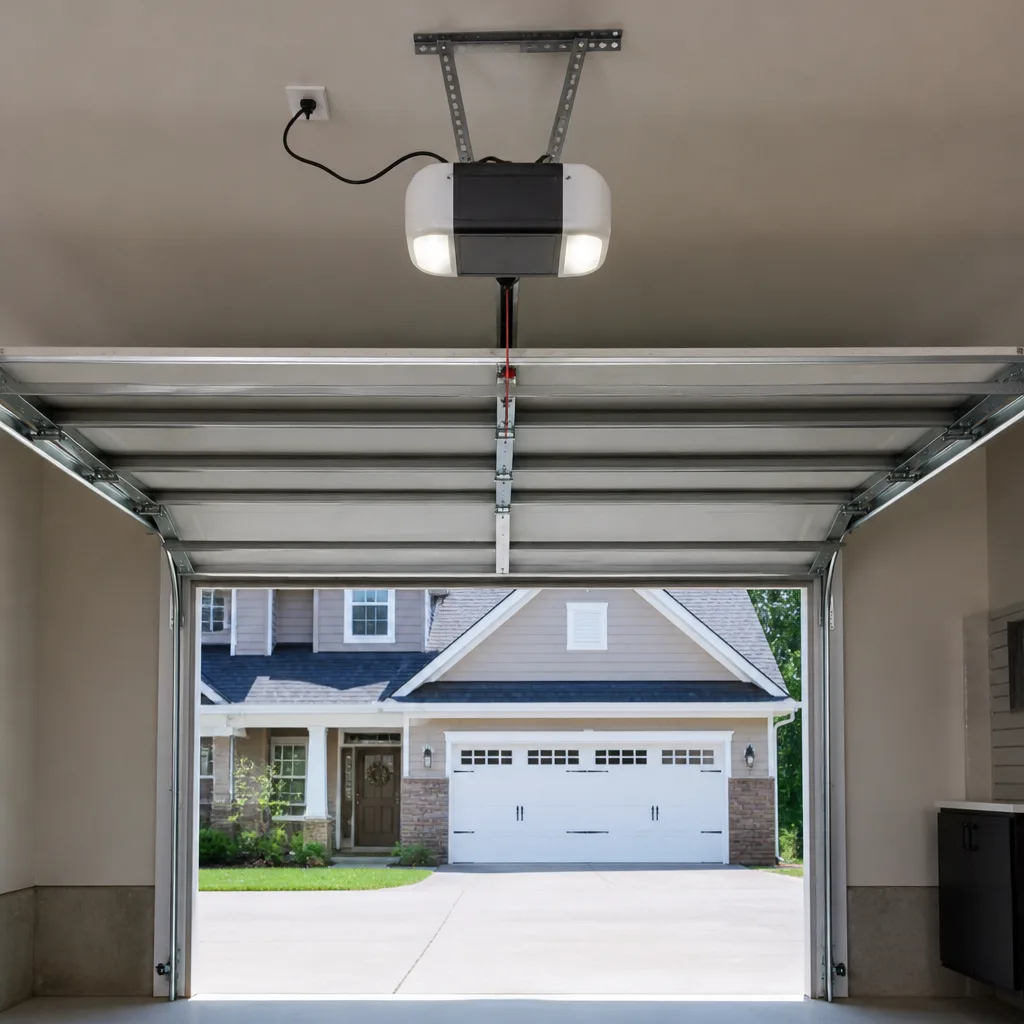 LiftMaster openers
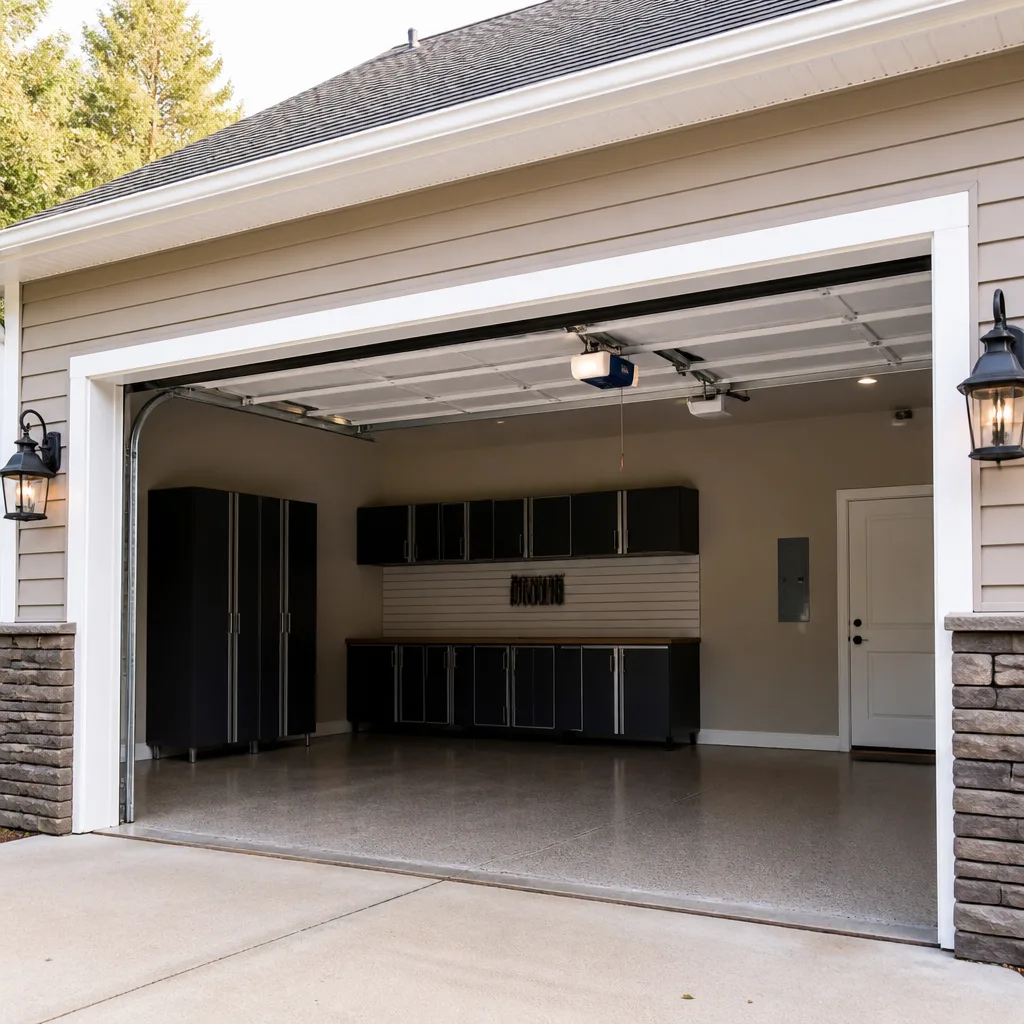 Chamberlain openers
Full 25-point door and opener safety check with every visit - springs, cables, rollers, tracks, and your LiftMaster or Chamberlain opener included
You get a price before we start. It does not change when the pro arrives.
Get your free estimateThe Complete Guide to Garage Doors in Centennial
Most garage door advice you’ll read was written for a climate that doesn’t exist here. It assumes mild seasons, stable humidity and a door that ages on a predictable schedule. Centennial doesn’t work that way. Sitting at roughly 5,900 feet along the Front Range, this city hands its garage doors a workload that manufacturers’ warranties rarely account for: a 50°F swing in a single day, hail that arrives sideways, freeze-thaw cycles that repeat for months, and air so dry it pulls moisture out of lubricants and seals. This guide treats Centennial as its own environment. You’ll learn how local conditions shorten component life, how HOA review shapes what you can install, why multi-brand fluency matters in a city built across three decades, and what installation and repair actually involve here.
Quick Answer
Garage doors in Centennial wear faster than the national average because of extreme daily temperature swings, hail and rapid freeze-thaw cycles, so springs, seals and opener gears tend to fail sooner than the manufacturer timeline suggests. The right approach is a door and opener setup rated for insulation and air sealing, installed to HOA architectural standards and serviced on a schedule that matches the local climate rather than a generic checklist. When something breaks, a specialist who recognizes your specific hardware fixes it faster and with fewer callbacks than a generalist.
Styles & brands we work with
- Raised-panel steel
- Carriage house
- Modern flush
- Full-view glass
- LiftMaster openers
- Chamberlain openers
Table of Contents
- How Centennial’s Climate Ages a Garage Door
- Why Multi-Brand Fluency Matters in Centennial
- HOA Approval and Architectural Review in Centennial
- What a Centennial Installation Actually Involves
- Your Opener, Diagnosed Right
- A Maintenance Schedule Built for the Front Range
- What Garage Door Work Costs in the Denver Metro
- Safety: What to Leave to a Trained Professional
How Centennial’s Climate Ages a Garage Door
Centennial’s elevation and geography put garage door components under stress that a door in a mild coastal market never sees. The core problem is thermal movement. A door panel that expands in afternoon sun and contracts hard after sunset moves against its neighbors, its hinges and its weather seal. Do that thousands of times a year and the failure points start showing up early: cracked panel skins, hinges that work loose, seals that harden and pull away from the frame.
Three local forces do most of the damage:
- Rapid temperature swings. A 50°F swing in a single day is normal here. Metal, plastic and rubber all expand and contract at different rates, so every joint in the door and every moving part in the opener takes repeated stress. Lubricants thin in heat and stiffen in cold, which means they stop protecting the surfaces they’re supposed to cover.
- Hail. Front Range hail doesn’t just dent cars. It dents and cracks steel door panels, knocks sensors out of alignment and can bend the lighter-gauge tracks that guide the door. A door facing the prevailing storm direction takes the worst of it.
- Freeze-thaw and low humidity. Water works into small gaps, freezes, expands and widens them. Meanwhile, the dry air pulls moisture from wood components, rubber seals and gaskets, so they shrink and crack. The bottom seal that should keep out weather and pests is often the first thing to go.
The practical takeaway: manufacturers’ life estimates assume average conditions. Centennial isn’t average. A spring that a national guide says lasts a certain number of cycles may reach the end of its useful life sooner here because the door is cycling through bigger temperature ranges and more weather events. That’s not a defect in the product. It’s the environment doing its work. What we’ve seen repeatedly is that doors in Centennial reward closer attention to seals, lubrication and hardware torque than doors in gentler climates.
None of this means you need a specialty door. It means you should buy and maintain for the conditions you actually have, which starts with understanding what’s on your house now.
Why Multi-Brand Fluency Matters in Centennial
Centennial’s housing stock spans roughly three decades of construction, and that history shows up in your garage. A home built in one era carries a builder-grade opener from one manufacturer and a door from another. A home built ten years later carries different hardware entirely. Walk a Centennial street and you’ll find LiftMaster and Chamberlain openers on doors made by Clopay, Amarr or Wayne Dalton, plus plenty of Craftsman units from the era when that brand dominated big-box retail.
This matters because garage doors are two separate systems. The door is one. The opener is the other. They fail for different reasons, get serviced by different skills, and often come from different manufacturers. When you call a generalist handyman, you’re asking one person to be fluent in both – and in every brand either system might carry. That’s where diagnostic time balloons and callbacks happen.
A specialist recognizes the hardware immediately:
- The torsion setup on a Clopay door behaves differently from the extension setup on an older Wayne Dalton, and each has its own spring and cable considerations.
- A LiftMaster opener’s safety-reverse system and travel limits are set differently from a Genie’s, and a sensor misalignment reads differently on each.
- Craftsman units that came with the house may be a decade or more behind current opener electronics, which changes the diagnostic path.
Brand breadth isn’t about selling a preferred product line. It’s about recognizing what’s already bolted to your ceiling and your door frame, and knowing how it’s supposed to behave. Our technicians have up to 9 years of experience across the full range of residential garage door and opener brands, so when you describe the noise or the symptom, the diagnosis starts from recognition, not from scratch. That’s the difference between a fix that holds and a repeat visit.
HOA Approval and Architectural Review in Centennial
Much of Centennial’s housing sits inside planned communities with active homeowner associations, and those associations have architectural review processes for anything visible from the street. Your garage door is one of the most visible things on your property. Changing it without approval can mean a written notice, a forced change, or an expense you didn’t plan for. Approval first is always the cheaper path.
Most Centennial-area HOA architectural reviews look at the same handful of factors. Knowing them before you shop saves weeks:
- Color. Associations usually restrict doors to a defined palette that harmonizes with the neighborhood’s palette. A door that’s technically beautiful but off-palette will get bounced.
- Panel style. Raised-panel, carriage-house and flush styles each read differently to a design committee. What’s common in newer sections of the city may not match an older community’s established look.
- Window placement and material. Windows change the door’s visual weight. Some associations allow them; some don’t, or restrict them to certain panel positions.
- Material and finish. Steel is the standard for most Centennial homes. Insulated vs. non-insulated and the finish (smooth, woodgrain, textured) can both fall under review.
- Submittal materials. Most reviews want the manufacturer’s spec sheet, color sample and a photo or rendering of the door on your home. A complete submittal moves faster than a partial one.
The door styles that consistently pass architectural review in Centennial’s planned communities are the ones that match the neighborhood’s original design intent: classic raised-panel steel in an approved color, or carriage-house styling where the community already has it. Manufacturers like Clopay and Amarr publish design and color documentation that makes the submittal straightforward, because their catalogs include the specs and finishes review committees ask for.
One more point. Ask your HOA whether the review covers only the door or also the opener and any visible hardware. Most do not, but a few do, and it’s better to know before you order. Your city’s building department can also tell you whether a permit is required for a door replacement in your situation; most cities require one for structural changes, so confirm rather than assume.
What a Centennial Installation Actually Involves
A garage door installation in Centennial isn’t the same job as an installation in a milder market, and it’s not the same as a generic national checklist. Two things drive the difference: the attached-garage norm and the climate. Most Centennial homes have an attached garage, which means the garage shares walls, and often a ceiling, with living space. That makes insulation value and air sealing part of the installation, not an upgrade.
Here’s how a proper installation typically runs, from measure to first cycle:
- Measure and assess. The opening, headroom, side clearance and the condition of the existing framing and track mounting all get checked. The measurements determine door size, track configuration and spring type. In an attached-garage home, the assessor also looks at the wall between the garage and the house, because that’s where air sealing matters most.
- Select the door and opener. A door with a meaningful insulation value cuts heat loss into the garage and, by extension, into the rooms above and beside it. The seal package – bottom seal, perimeter seal, threshold – is what actually does the air-sealing work, and in a Centennial winter it’s the difference between a garage that stays reasonable and one that doesn’t. The opener gets matched to the door’s weight and the home’s wiring.
- Order and schedule. Doors are built to measure. That means this work is measured, ordered and scheduled, not same-day. Many HOA submittals run parallel to this step, which is why approval first matters.
- Remove and install. Old door and hardware come down, the new track and brackets go up, the door sections go in, and the torsion or extension system gets set for the door’s actual weight. Springs and cables are under high tension at this stage and are handled by trained technicians, never by the homeowner.
- Set the opener and balance the door. Travel limits, force settings and safety-reverse get set. The door is balanced so it moves evenly with the opener disconnected. Sensors get aligned and tested.
- Final test and walkthrough. Every safety feature gets cycled and confirmed. You get shown how the manual release works and what to check between service visits.
Brand choice during this process is mostly about matching the door to the house and the budget tier. Clopay and Amarr cover the range from builder-grade to premium insulated doors. Wayne Dalton offers solid mid-tier options. Craftsman appears most often at the opener end. The important thing is that the door and the opener are specified together, so nothing is mismatched at the end.
A word on expectations: because this work involves a measure, an order and a scheduled installation, it’s a planned project. What we promise is a free measure and a written price before anything is ordered.
Your Opener, Diagnosed Right
The opener is the most failure-prone and the fastest-changing component of a garage door system. It’s also the part most people misdiagnose. A door that won’t open fully, reverses halfway up, or makes a new noise is usually a door problem showing up through the opener, not an opener problem at all. Getting that distinction right is the whole job.
Common symptoms and what they usually point to:
- Door reverses immediately after closing. Often the safety sensors – misaligned, dirty, or knocked by a bump – or a force setting that needs adjustment. On some brands the sensor indicator light tells you which side is the problem; on others you need to check both.
- Opener runs but the door doesn’t move. Usually a broken spring or a disconnected trolley, not an opener failure. The motor is fine; it’s trying to lift a door it can’t lift without spring assist (and if the spring is broken, stop using the opener before it damages the unit).
- Grinding or straining noise. Worn gears inside the opener, or a door that’s out of balance. Genie and Chamberlain units have different gear assemblies, and the fix follows the brand.
- Remote or keypad stops working while the wall button still does. Usually a remote, battery or radio-frequency issue, not the opener’s logic board.
- Opener works intermittently. Could be wiring, a failing logic board, or a safety sensor that’s only failing at certain temperatures – a real pattern in Centennial, where a sensor that works at noon may fault at 30°F.
This is where opener repair as its own discipline matters. An opener is electronics and mechanics working together, and each brand’s diagnostics are different. Craftsman and LiftMaster share design lineage in many units, while Genie and Chamberlain take different troubleshooting paths. Diagnosing it right the first time – rather than replacing parts and hoping – is how you avoid callbacks. If your opener is past its practical life, garage door opener repair can also guide you toward whether repair or replacement makes more sense, which is a decision worth getting right.
A Maintenance Schedule Built for the Front Range
A national maintenance checklist assumes average conditions. Centennial doesn’t have average conditions, so the schedule that actually protects your door looks a little different – more emphasis on lubrication, seals and hardware torque, because those are the parts this climate attacks first. None of this involves high-tension components. If your check turns up a spring or cable problem, that’s a call to a professional.
A practical Centennial schedule:
- Monthly: visual and noise check. Open and close the door and listen. New grinding, squealing or clicking is information. Look for anything visibly loose or hanging.
- Quarterly: lubricate and inspect seals. Lubricate hinges, rollers, tracks and the opener’s moving parts with a product rated for temperature extremes – the wrong lubricant stiffens in cold, which is worse than none. Check the bottom seal and perimeter seal for cracking and separation. The dry air here makes this the most commonly skipped and most commonly needed step.
- Quarterly: check hardware torque and balance. Look for loose hinge screws and roller brackets and tighten what’s visibly loose. Test the door’s balance by disconnecting the opener and lifting it about halfway by hand – a well-balanced door stays put. Also test the safety reverse with a small object in the door’s path.
- Annually: professional inspection. A trained technician checks spring tension, cable condition, track alignment, roller wear and opener force settings. Springs and cables are under high tension and aren’t a homeowner check.
- After any major hailstorm: inspect the door. Look for dents and cracks in panels, bent tracks and knocked sensors. Hail damage compounds; a small dent that lets water in becomes a rust problem over a Centennial winter.
That schedule adds up to maybe an hour of your time a quarter and one professional visit a year. It won’t stop every failure, but it pushes the timeline back toward what the manufacturer intended, and it catches the cheap fixes before they become expensive ones.
What Garage Door Work Costs in the Denver Metro
Denver metro labor rates run higher than national averages, and garage door work is no exception. A door installation here costs more than the same door installed in a lower-cost market, not because the work is different but because the labor market is. That’s the honest picture, and it’s the one national cost guides usually leave out.
What drives the price in Centennial:
- Door and opener selection. A builder-grade steel door and a premium insulated door sit at very different price points, and the same is true across opener tiers.
- Insulation value and sealing. Attached garages in Centennial benefit from insulated doors and a complete seal package. That’s part of the spec here, not an optional add-on.
- Labor market. Denver metro labor is a real cost factor in every trade, garage doors included.
- HOA documentation. Nothing exotic, but a complete submittal saves time and avoids reorders.
- Site conditions. Headroom, clearance, framing and track condition can all add labor on a specific job.
Because prices depend on the door, the opener, the site and the timing, we don’t publish a single number that pretends to cover everyone. What we do is quote per job: we measure, we specify, and we put the price in writing before any work starts. That written estimate is the price. You agree to it before we order anything or begin.
The right way to get an accurate number for your Centennial home is a free estimate. Call (844) 834-3842. We answer 24/7. Fast dispatch from 7am to 7pm, Sunday through Friday.
Safety: What to Leave to a Trained Professional
Two parts of a garage door system are genuinely dangerous, and they’re the two most commonly tackled by homeowners who shouldn’t. Torsion springs and cables are under very high tension. A spring that releases suddenly or a cable that snaps can cause serious injury, and the tools required to handle them safely aren’t in a normal home toolkit. The same goes for the electrical side of an opener: wiring, logic boards and the low-voltage safety circuit all carry their own risks.
The line is simple. Checking and lubricating is homeowner territory. Adjusting a torsion spring, replacing a cable, rewiring an opener or working on an electrical panel is not. If your inspection turns up a spring that looks stretched, a cable that’s frayed or loose, or a door that’s suddenly hard to lift, stop using the opener and get a professional out. A trained technician has the tools and the experience to handle those components safely, and that’s the only responsible way to work around them.
Common Mistakes to Avoid
- Shopping for a door by color alone. Color is the last thing the HOA looks at and one of the first things that gets rejected. Start with the association’s approved styles and palette, then choose.
- Buying a new opener for a door that needs spring repair. If the door is heavy or won’t stay up when you lift it, the problem is the door, not the motor. Replacing the opener first wastes money and risks damaging the new unit.
- Skipping the seal package on an attached-garage install. In Centennial, the seal is the air barrier. A well-insulated door with a worn bottom seal loses most of its benefit.
- Using the wrong lubricant. Standard lubricants stiffen in the cold and thin in the heat, which is exactly the wrong behavior for a Centennial door. Use one rated for the temperature range you actually have.
- Assuming one brand covers everything. Centennial homes routinely have one manufacturer’s door and another’s opener. Check both before you shop, so the parts and service match what’s on the house.
- Ignoring hail damage. A dent or crack that seems minor lets water in, and water plus a Centennial freeze-thaw cycle turns a small ding into a rusted panel. Inspect after storms.
- Doing spring or cable work yourself. These components are under high tension. This is the one item on the list where the cost of a professional is always lower than the cost of getting it wrong.
See the difference
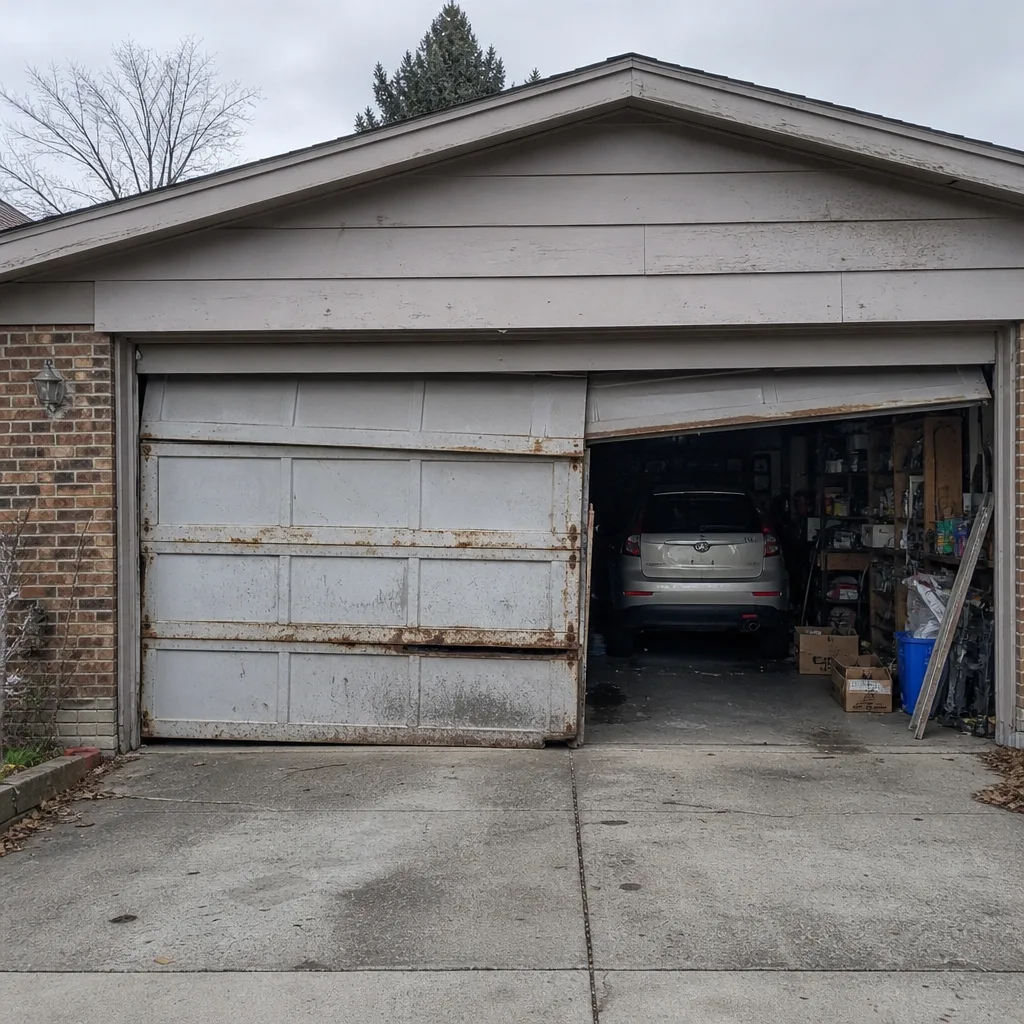 Before
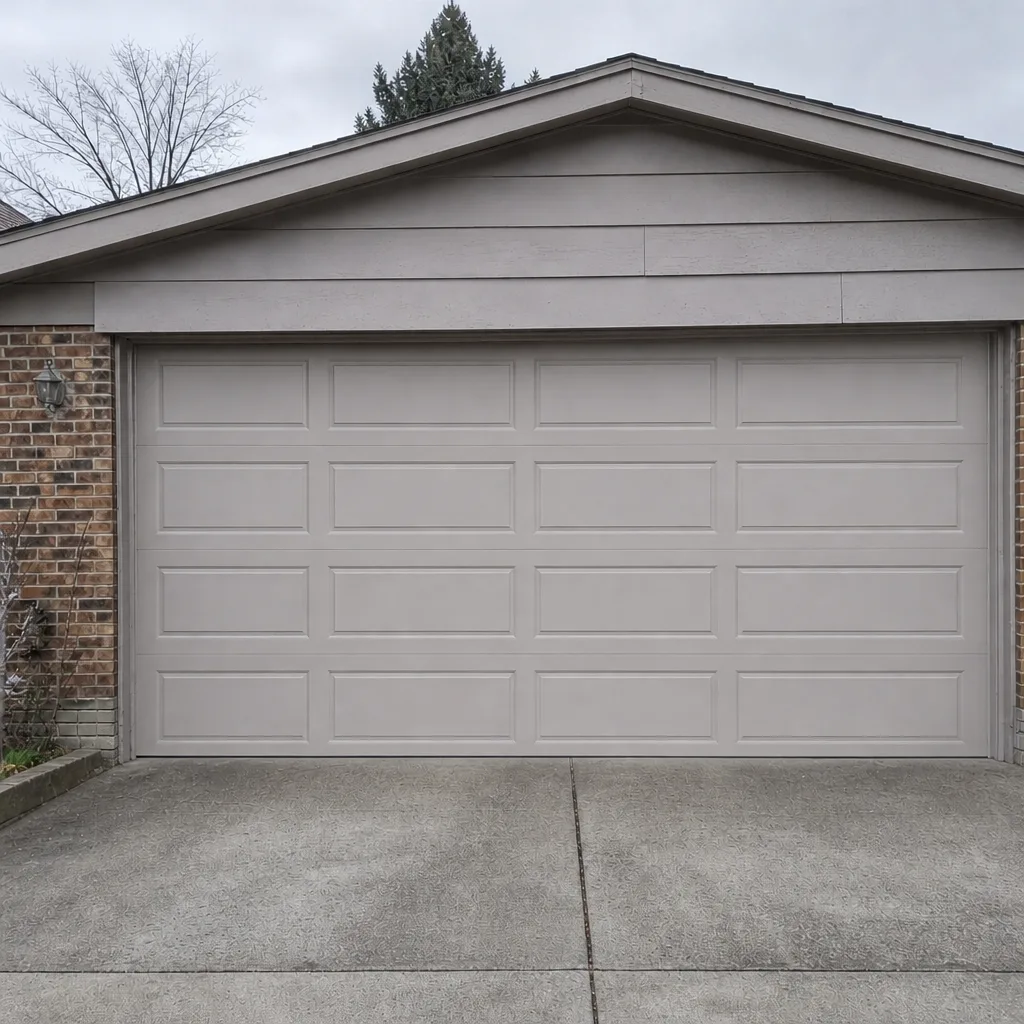 After
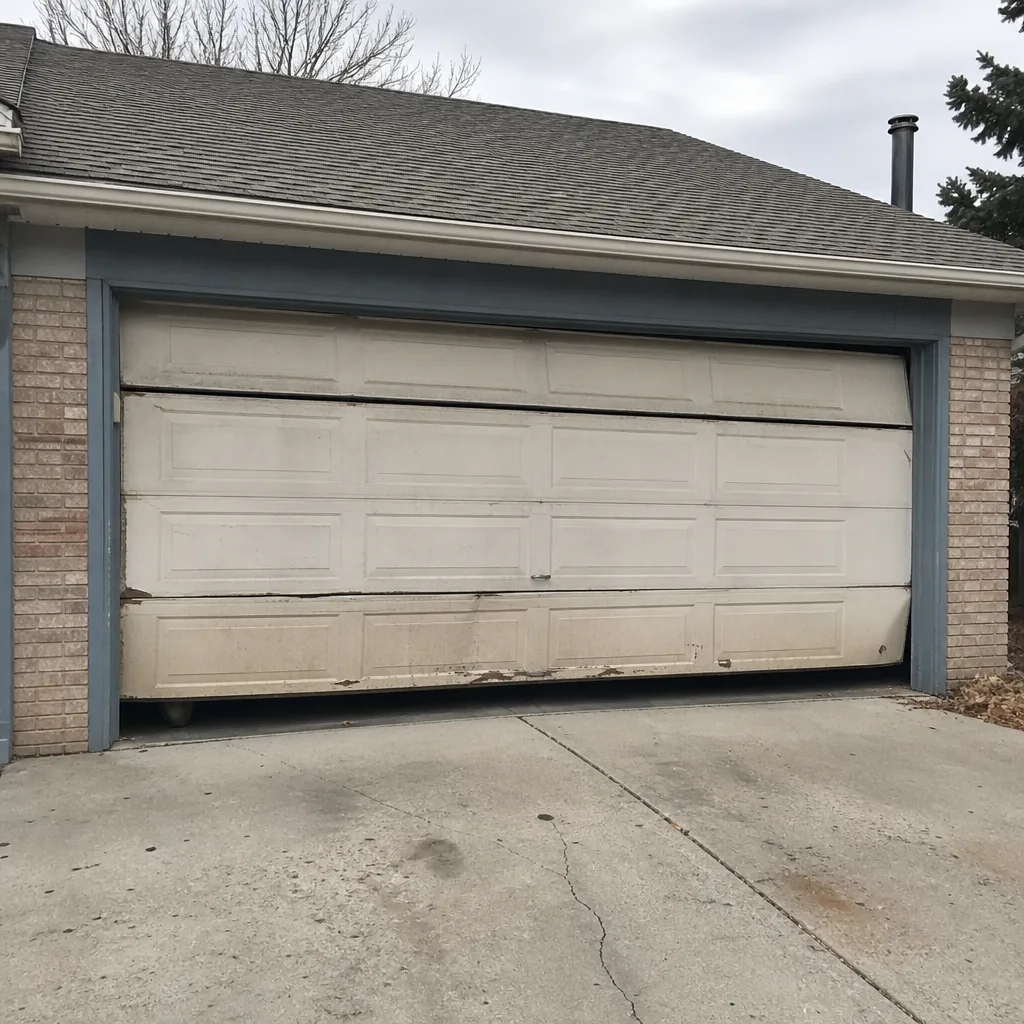 Before
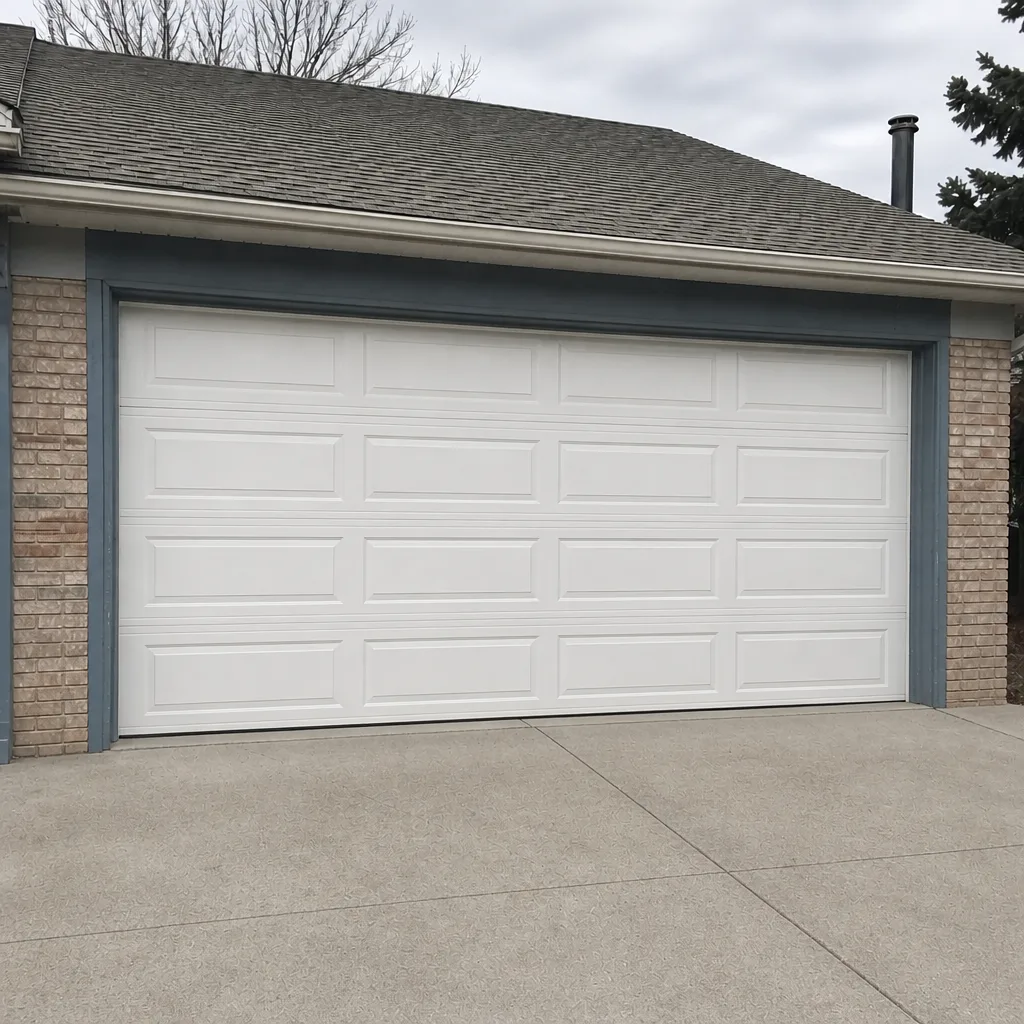 After
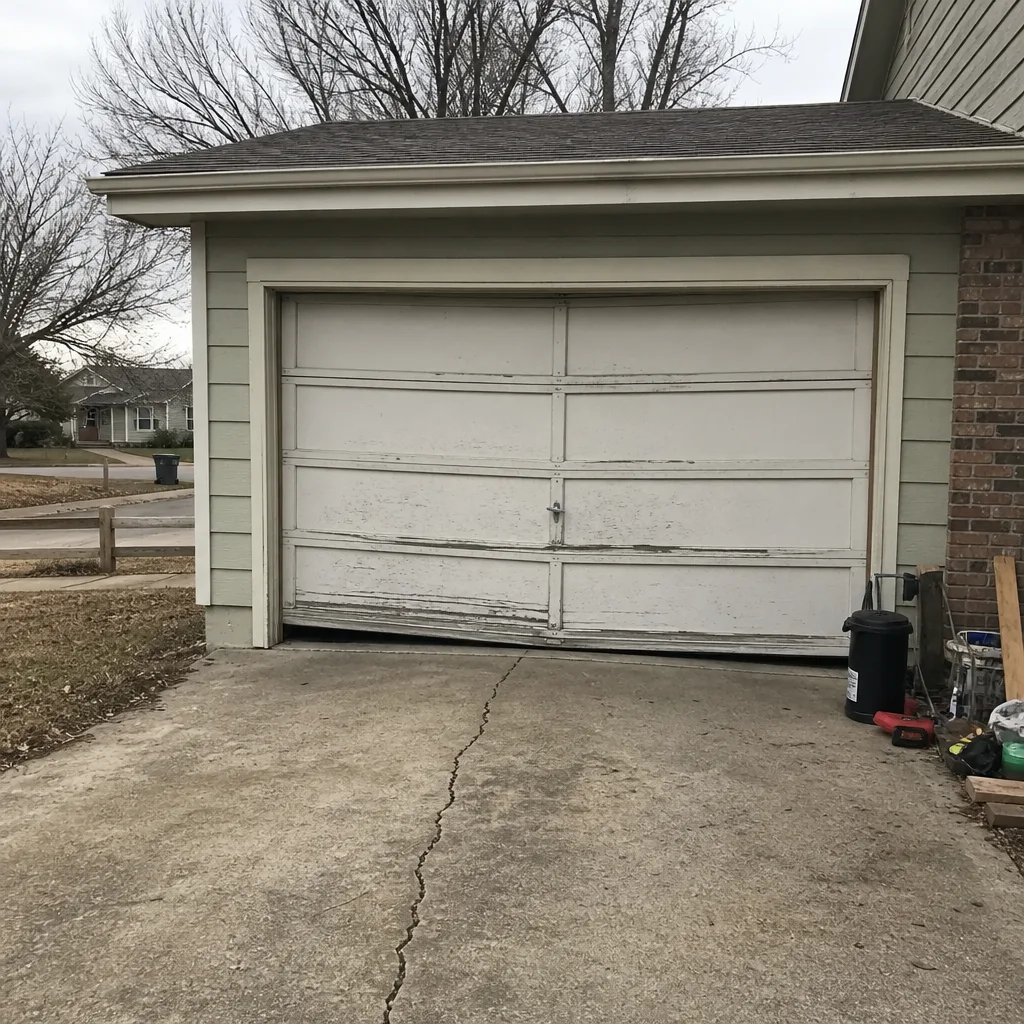 Before
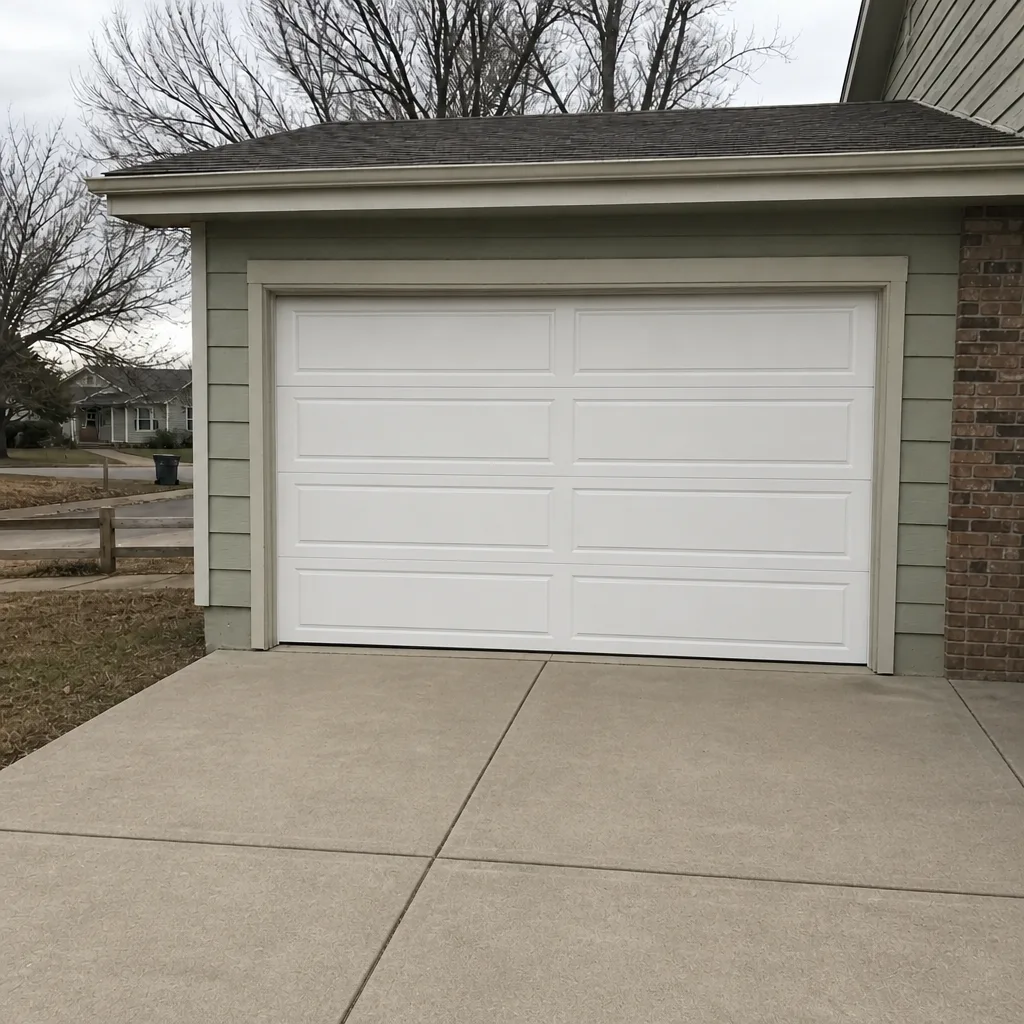 After
When to Call a Professional
Call a professional when the door won’t stay up on its own, when a spring or cable looks worn, frayed or stretched, when the opener reverses or strains repeatedly, when a panel is cracked or the track is bent, or when the door makes a new noise that doesn’t go away. Call after a serious hailstorm if anything looks dented, bent or knocked out of alignment. And call if you’re planning a replacement and want the measure, the spec and the written price done right the first time. Lockhart Garage Door Service offers free estimates in Centennial – call (844) 834-3842. We work on whatever brand is on your home, because garage doors are all we do. For a closer look at our repair work, garage door repair lays out how we approach each job.
Frequently Asked Questions
A well-maintained garage door in Centennial typically outlasts its hardware, because the local climate wears springs, seals and opener components faster than the door itself. Expect the door to stay in service longer than the mechanical parts if you keep up with lubrication, sealing and annual inspection. The door itself tends to last until hail or a structural issue takes it out, which is why post-storm checks matter here.
Most cities require a permit for structural changes to a garage door, and it’s best to confirm with Centennial’s building department before you schedule work. The rules can depend on what’s being changed, so ask rather than assume. Your HOA review is a separate process and usually runs in parallel.
A door that reverses halfway is usually tripping its safety sensors or a force setting that’s out of adjustment, not failing structurally. Check for anything in the door’s path, then look at the sensors at the bottom of the track for dirt, misalignment or a knocked bracket. If the problem persists, especially at certain temperatures, it’s worth a diagnostic call. Call (844) 834-3842 for an exact quote – estimates are free.
Yes, if the door itself is balanced, undamaged and has a working spring system. A new opener matched to the door’s weight will run correctly on a healthy door. Replacing the opener first when the door is the actual problem is a common and expensive mistake, so have both checked together.
Yes, especially on an attached garage, where the garage shares walls with living space. An insulated door reduces heat loss into the garage, and combined with a proper seal package it makes the garage noticeably more reasonable in winter and summer. The insulation value matters less than the complete seal around the door.
We work on the leading residential garage door and opener brands, including LiftMaster, Chamberlain, Genie, Clopay, Amarr, Wayne Dalton, Craftsman and Raynor. That means we recognize your hardware and diagnose it correctly rather than guessing. Call (844) 834-3842 to confirm your specific model – estimates are free.
The Bottom Line
Centennial asks more of a garage door than most cities do. The daily temperature swings, hail, freeze-thaw cycles and dry air all speed up wear on springs, seals and openers, and the city’s HOA-heavy planned communities add an approval step that generic buying guides ignore. The answer isn’t a specialty door. It’s buying for the conditions you actually have, specifying the door and opener together, getting HOA approval first, and maintaining on a schedule that matches the Front Range rather than a national checklist. Our technicians have up to 9 years of experience across the brands most Centennial homes carry, and Centennial is home base for the work we do. If you’re planning a repair or a replacement, get the measure and the written price first. Call (844) 834-3842 for a free estimate. We answer 24/7. Fast dispatch from 7am to 7pm, Sunday through Friday. And if you’re new to the area, Lockhart Garage Door Service is where to start.
Written by the team at Lockhart Garage Door Service.